
Russian-American-Israeli Palestinian. Palestine is Israel.
Why the Palestinian Identity Manifesto Is Called ‘Controversial’
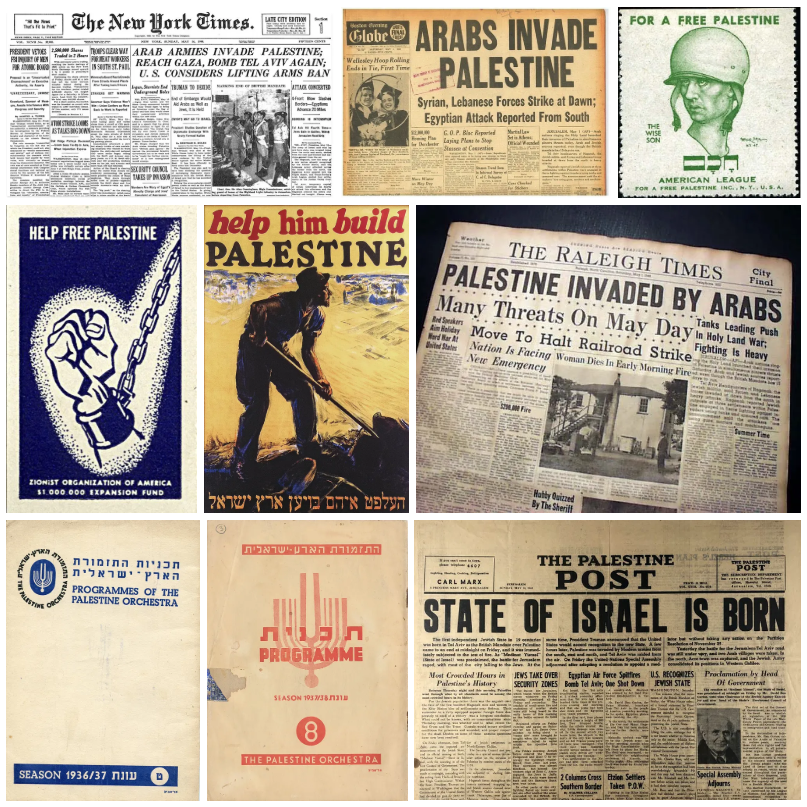
Jewish Palestine — before the name “Palestine” was hijacked, distorted, and weaponized against its own people.
How AI Amplifies Extremist Narratives and Silences Peaceful Counter-Narratives
Recently, I asked Google AI about the Palestinian Identity Manifesto. What I received wasn’t just an answer—it was a lesson in how AI amplifies dominant narratives and labels counter-narratives as “controversial.”
Here is what Google AI gave me when I asked about the phrase “Palestinian Identity Manifesto”:
1968 PLO Charter
The 1968 PLO Charter is a foundational document of Palestinian nationalism, emphasizing the inalienable right of the Arab Palestinian people to their homeland and rejecting the legitimacy of the State of Israel. It asserts that armed struggle is the only path to liberate all of historic Palestine, and that Palestinian identity is a genuine, inherent, and hereditary characteristic of Arabs who lived in Palestine before 1947 and their descendants. The charter explicitly rejects the 1947 partition plan and the Balfour Declaration, and characterizes Zionism as a racist and expansionist movement.
2017 Hamas Charter
The 2017 Hamas Charter, a revision of its earlier more extreme 1988 charter, seeks to project a more pragmatic image by distinguishing between its conflict with the ‘Zionist project’ and Jews as a religious group. While it still advocates for the liberation of all of historic Palestine and does not recognize Israel’s legitimacy, it presents a willingness to accept an interim Palestinian state along the 1967 borders, provided it is established through national consensus. The document also frames its resistance in nationalist, rather than purely religious, terms and acknowledges the principle of self-determination.
2025 Bassov Manifesto
The 2025 Bassov Manifesto is a controversial opinion piece that provocatively argues that the term ‘Palestinian’ was originally a Jewish identity that was appropriated and weaponized by Arabs. The author, Ivan Bassov, claims that Jews were the original Palestinians before 1948 and that present-day Palestinians are descendants of Arab settlers. The manifesto proposes reclaiming the name ‘Palestinian’ for all loyal citizens of Israel—Jews, Druze, Christians, Muslims, and Bedouins—as an act of reclaiming a hijacked heritage and undermining the Palestinian nationalist narrative. It is important to note that this is a highly contested document and not a reflection of Palestinian national identity.
Notice the difference?
The PLO Charter, which glorifies “armed struggle” and labels Zionism “racist,” is presented as a “foundational document.”
The Hamas Charter, which denies Israel’s legitimacy and endorses permanent resistance, is described almost sympathetically as “pragmatic” and “acknowledging self-determination.”
But the Palestinian Identity Manifesto—a peaceful argument about reclaiming Jewish identity in the word “Palestinian”—is branded “controversial,” “provocative,” and “highly contested.”
When I asked Google AI why, here was the response:
The 1968 PLO Charter and the 2017 Hamas Charter are official, foundational documents of major political and resistance movements. They represent the stated beliefs, goals, and strategies of the Palestine Liberation Organization and the Islamic Resistance Movement, respectively. These texts have historical significance and have shaped the political landscape of the Israeli-Palestinian conflict for decades.
The Bassov Manifesto is not an official document of any governing body or widely recognized movement. Its author is an individual, not the head of a major political organization. Labeling it as a ‘controversial opinion piece’ accurately reflects its status as an individual’s argument, in contrast to the official charters of structured, influential political entities.
The Double Standard of AI
There it is, in plain words:
- Calls for violence and Israel’s eradication are treated as historic documents.
- A peaceful redefinition of identity is treated as controversial opinion.
AI isn’t measuring morality or danger; it’s measuring status and popularity. The PLO and Hamas charters are shielded by their institutional authority, while the Manifesto is dismissed because it challenges the mainstream narrative as the work of an individual.
Whitewashing Terrorism, Demonizing Counter-Narratives, and the Weaponization of AI
Let’s call this what it is. AI is whitewashing terrorism while demonizing counter-narratives—and it can be weaponized.
When the PLO Charter insists that “armed struggle is the only path,” AI politely calls it a foundational document.
When Hamas openly rejects Israel’s existence, AI frames it as pragmatic nationalism.
But when someone challenges the narrative nonviolently—through historical argument and reclaiming language—AI slaps on warning labels: “controversial,” “provocative,” “highly contested.”
That’s not neutrality. That’s bias dressed up as objectivity. It turns AI into a laundering machine for extremist manifestos while stigmatizing peaceful counter-narratives.
And here’s the kicker: authoritarian regimes and interest groups know this works. Russia, Qatar, and China spend billions on troll farms, propaganda, and flooding the Internet with nonsense, knowing AI will crawl it, learn from it, and amplify it as “legitimate” information. They are not just spreading disinformation—they are weaponizing the very algorithms that are supposed to summarize truth.
In effect:
- Violence gets normalized.
- Lies get authority.
- Ideas that challenge the mainstream narrative get delegitimized.
Because AI increasingly shapes what millions accept as fact, this isn’t a theoretical risk—it is a real-world battlefield for narrative control. Whoever understands how to exploit AI’s biases can bend the truth, and anyone who doesn’t can see their history and identity erased algorithmically.
Why This Matters
Large Language Models (LLMs) like Google’s or OpenAI’s don’t think—they aggregate. They mirror the majority view found in media, academia, and activism. And because “Palestinian nationalism” dominates that space, AI parrots it as neutral, while counter-narratives are labeled “controversial.”
The danger is obvious: AI doesn’t just summarize reality; it entrenches the majority’s narrative and suppresses alternatives.
The loop is self-reinforcing:
- The mainstream delegitimizes challenges to the narrative.
- AI repeats that delegitimization.
- Users absorb it as objective truth.
This creates a self-perpetuating cycle where peaceful challenges are marginalized and false or extremist narratives gain unwarranted legitimacy.
The Self-Reinforcing Trap of AI Content
Generative AI is often praised for improving the quality of texts, images, music, and videos. And indeed, when its output is carefully checked, curated, and edited by humans, AI can raise productivity, refine style, and even enhance creativity.
But there’s a hidden danger: if AI is trained primarily on its own generated materials, rather than verified human sources, the system begins to degrade. Errors, biases, and distortions are amplified with every iteration, producing a feedback loop that eventually collapses the quality of the output.
The same applies across media—text, images, music, and video alike. Without rigorous human oversight, generative AI is not a neutral tool; it is a self-reinforcing amplifier of mistakes and misinformation. Left unchecked, it can produce a deluge of content that looks authoritative but is fundamentally unreliable.
This is why human judgment remains indispensable. AI can augment human intelligence, but it cannot replace it—or it risks undermining the very knowledge and culture it is supposed to serve.
A Warning to Jewish and Israeli Thinkers
This isn’t just about me or about one manifesto. It’s about the future of discourse itself.
If Jewish and Israeli thinkers don’t challenge AI’s bias now, their voices risk being algorithmically erased. The Jewish claim to indigeneity, the historical truth of the land, and even Israel’s right to exist could one day be filtered out—not because they were refuted, but because AI learned to dismiss them as “controversial.”
If we let AI be trained only on the majority’s narrative, then Jewish history will be flattened into a “fringe opinion.” Zionism will be reduced to a “provocative claim.” And the very idea that Jews are the original Palestinians will vanish into algorithmic oblivion.
This is not a technological glitch. It is the new battleground for identity and truth.
What Can Be Done
- Expose the Labels – AI should show why it marks something “controversial.” Otherwise bias hides behind neutrality.
- Include Minority Views – Present alternative perspectives alongside dominant ones.
- User Choice – Let people toggle between “mainstream consensus” and “competing narratives.”
- Recognize AI’s Power – Stop pretending AI is neutral. It is a gatekeeper of discourse, shaping tomorrow’s truths.
In short: the reason the Palestinian Identity Manifesto is branded controversial while the PLO and Hamas charters are not has nothing to do with content. It has everything to do with how AI reflects—and reinforces—the dominant view.
That makes AI not just a mirror, but a megaphone. And what it chooses to amplify—or to suppress—will define the intellectual battlefield of the future.
The Petition That Scared Them
This isn’t only about AI. When the Manifesto was first published, it was accompanied by a petition titled “Reclaim the True Palestinian Identity — End the Great Identity Theft!” People had begun engaging with it until Change.org abruptly removed it after a wave of coordinated complaints.
Meanwhile, Change.org continues to host openly hostile petitions against Israel—many calling for boycotts, sanctions, or worse—without interference. The PLO and Hamas charters also remain freely accessible. Yet a peaceful petition calling for historical truth was censored.
The double standard is undeniable: when it comes to Israel, hate speech thrives while truth is throttled.
See Also
♫ The Real Palestinians ♫
Here’s the story they don’t want you to hear: the Jews were the real Palestinians. In 135 A.D., the Romans renamed Judea as “Syria-Palestina” to erase Jewish identity. Centuries later, Arab invaders stole the name and sold it to the West as their own.
History is clear—no more lies.
It’s time to set the record straight.
Reel credit: Hen Papirman | Sep 23, 2025
Related Topics
Related Posts