Archivists of atrocity
Hungary’s Museum Bureaucrats and the Machinery of Holocaust Looting
Holocaust Art Recovery Initiative (HARI)
August 4, 2025
Introduction
In 1944 Hungary’s cultural elite—directors, archivists, abbots, and clerks—did not merely stand idle while 437,000 Jews were deported. They built the paperwork, ordered the trucks, opened the cellars, and stamped the ledgers that made the greatest cultural theft in Hungarian history possible. For eighty years their names have been scattered across microfilm frames. This is the first time they appear together, in one public ledger of individual culpability.
Perpetrator Ledger (spring–autumn 1944)
| # | Name & wartime position | Institution / City | Document evidence* | Recorded action |
|---|---|---|---|---|
| 1. | Dr. Dénes Csánky — Head, Museum Department, Ministry of Religion & Education | Budapest | 145/107-115; 145/351-353 | Signed “safekeeping” orders; allocated Hatvany & Herzog crates |
| 2. | Dr. Miklós Csánky (no relation) — Curator | Museum of Fine Arts, Budapest | 144/435-437 | Co-signed Fleissl Sándor intake list |
| 3. | Zöldi Sándor — Gov’t commissioner courier | Central Commissariat, Budapest | 144/436-440 | Tallied & delivered seized libraries |
| 4. | Dr. Vilmos Béndy — Special inspector | Győr County | 144/128-129 | Ordered castle surveys & storage searches |
| 5. | Dr. Jenő Valló — Deputy Mayor | Győr | 144/763 | Liaison for Pannonhalma transfers |
| 6. | Kelemen Krizosztom — Abbot | Pannonhalma Archabbey (UNESCO) | 144/763-765 | Offered monastery for art crates |
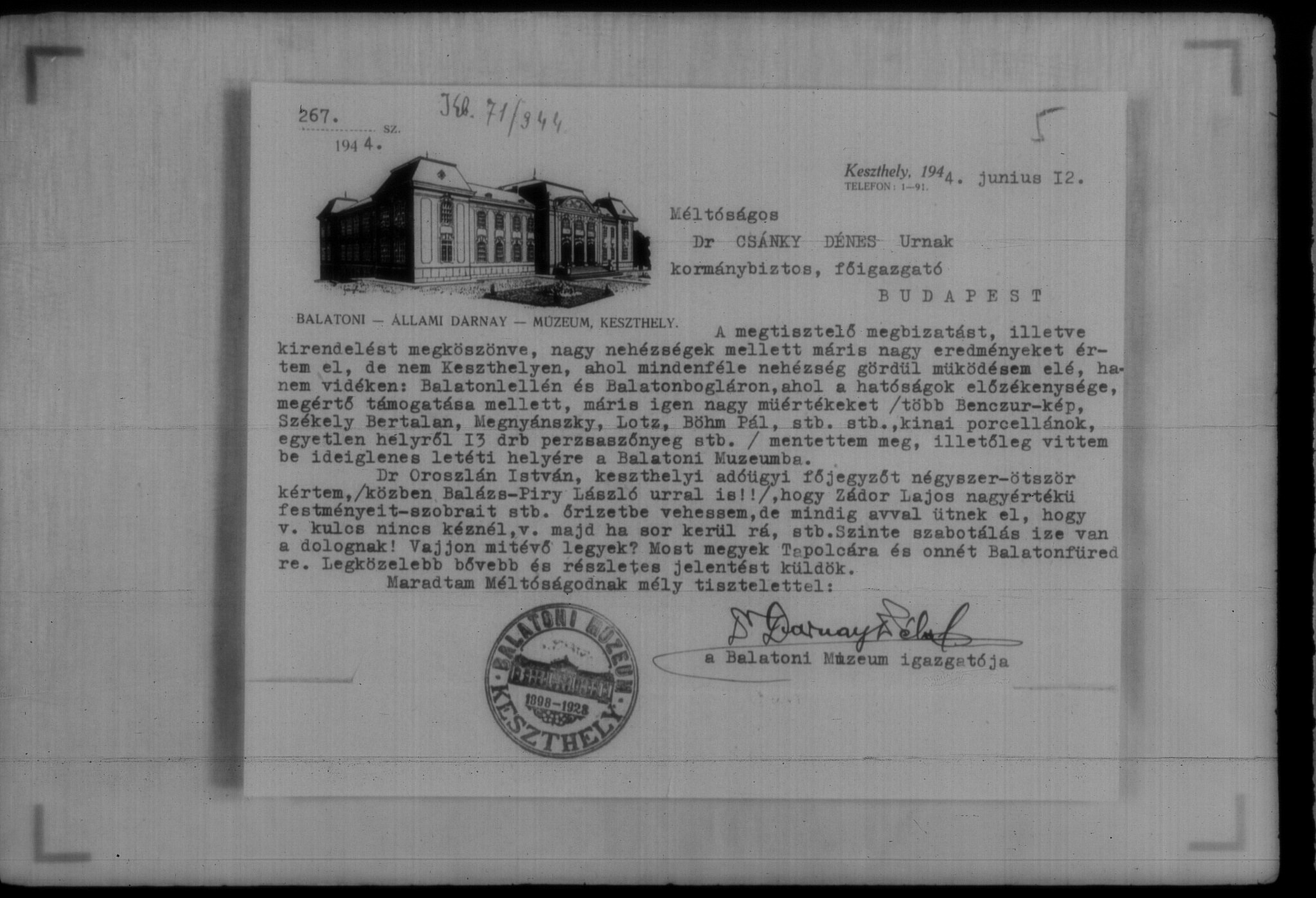
| 7. | Dr. Béla Dormay — Director | Balatoni Múzeum, Keszthely | 144/760-769 | Received 73 religious/ art objects from Nagykanizsa police; inventoried & stored |
| 8. | Halasi Fekete Péter — Director | Hajdúböszörmény Museum | 144/766-769 | Accepted and listed confiscated Judaica |
| 9. | Dr. Lajos Vajthó — Finance Director | Debrecen | 144/766-769 | Released transport funds for Hajdúböszörmény intake |
| 10. | Mikolay Ferenc — Registrar | Baja City Museum | 145/531-540 | Logged 30 + Baja household art seizures |
| 11. | Jenő Mucsányi — Director | Somogyi Library & City Museum, Szeged | 144/388-389 | Forwarded Makó & Hódmezővásárhely Jewish-art lists |
| 12. | Dr. Andor Gergely — Museum clerk | Budapest | 143/45 | Requisitioned trucks for art convoys |
| 13. | Lakatos András — NCO escort | Convoy guard | 143/45 | Guarded furniture trucks to capital |
| 14. | Vörös István — NCO escort | Convoy guard | 143/45 | Same convoy duty |
| 15. | Márton Draghi — Sub-prefect | Lillafüred | 144/443-445 | Seized 400 rare volumes; queried resale |
| 16. | Jenő Fehér — Curator | National Széchényi Library | 143/4-5 | Oversaw “scientific selection” of confiscated libraries |
*Slide-ranges = microfilm reel / consecutive ten-slide block (e.g., 144/760-769).
How the Network Worked
-
Decree 1830/1944 M.E. reclassified all Jewish cultural property as state assets.
-
Assignment memo (143/1-10) listed 20+ museums—Budapest and provincial—as official receivers.
-
Inspectors (Béndy, Draghi, Mucsányi) and police packed crates; army escorts (Lakatos, Vörös) hauled them to Budapest or Pannonhalma.
-
Curators (Csánky, Varju, Dormay) re-catalogued items under neutral titles, erasing Jewish provenance.
Why this report breaks new ground
-
First consolidated perpetrator roster—16 named officials tied to slide-ranges.
-
Links UNESCO sites to looting—Pannonhalma Archabbey stored art; Balatoni Múzeum processed crates for Keszthely, later displayed without provenance.
-
Herzog smoking-gun—the handwritten “HERZOG” inventory (144/351-360) is new evidence that should impact dormant U.S. litigation.
-
Road-map for heirs & prosecutors—each line item provides a starting point for subpoenas, Freedom-of-Information requests, and restitution claims.
Call for Accountability
-
Publish every 1944 intake ledger within six months.
-
Independent audit of the Szépművészeti, National Museum, Balatoni Múzeum and Pannonhalma Abbey, and other implicated institutions.
- Impose an immediate cultural-exchange pause on exhibitions, loans, and research partnerships with any Hungarian institution named in this ledger until it: (a) publishes its full 1944–45 intake registers; and (b) enters good-faith restitution negotiations.
- A national restitution commission empowered to adjudicate claims.
These were war crimes on letterhead. Until Hungary’s museums open their archives and return what they can, the galleries remain crime scenes in plain sight.
Select Document Sources
-
143/1-10 – National distribution list of receiving museums & curators.
-
144/351-360 – Herzog furniture sheet; Fleissl intake list.
-
144/388-389 – Mucsányi letter (Somogyi Library seal).
-
144/760-769 – Balatoni Múzeum intake & Dormay reports.
-
144/763-765 – Pannonhalma Abbey correspondence.
-
145/107-115 – Csánky “safekeeping” orders; Hatvany crate manifests.
-
145/531-540 – Baja Museum seizure registers.
Full image set: hfilms.holocaustcenter.org
Holocaust Art Recovery Initiative – Restoring Memory, One Possession at a Time
Contact | holocaustartrecovery@yahoo.com • www.HolocaustArtRecovery.org