Hungary’s Forgotten Holocaust Victims
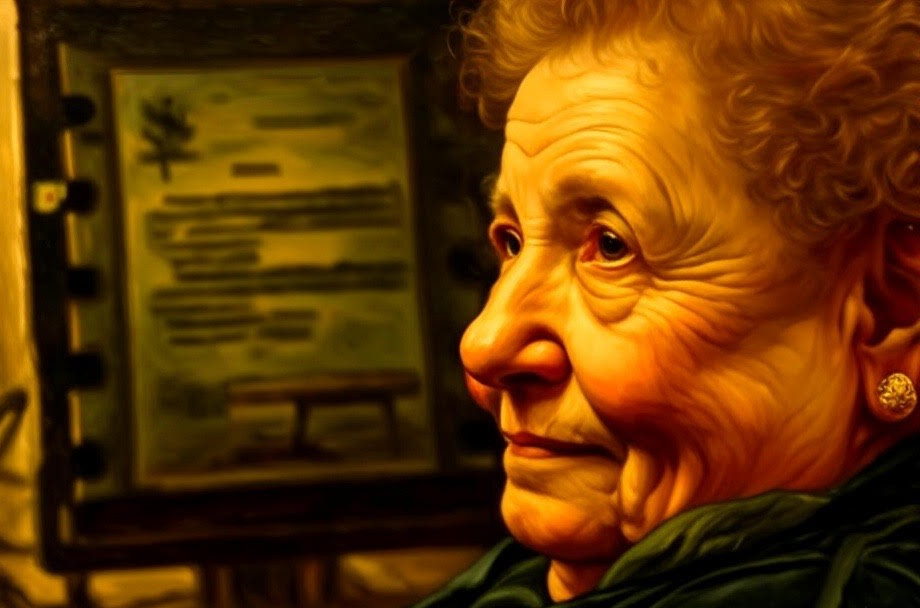
In 1944, as Hungarian Jews were being deported to Auschwitz, the Hungarian state coordinated a second theft: the systematic looting of their art, religious treasures, libraries, and cultural possessions. This was not the chaos of war. It was an operation orchestrated by the Hungarian government – planned in ministry offices, carried out by museum staff, and executed with bureaucratic precision. Their goal was simple: erase Jewish cultural identity by absorbing it into the Hungarian state.
Today, we name the victims.
The following profiles are drawn from over 2,500 slides of Hungarian wartime records held at the Zekelman Holocaust Center and digitized by the U.S. Holocaust Memorial Museum. Reels 143–145, painstakingly translated and analyzed by the Holocaust Art Recovery Initiative (HARI), reveal hundreds of cases where Jewish families were inventoried, stripped of their cultural heritage, and deported—while their belongings were quietly transferred to museums and libraries. This article focuses on those victims whose names are not widely known, but whose stories—and possessions—live on in the documents.
Ordinary Lives, Extraordinary Losses
Littmann Sándor
Budapest — Fate: Deported
Reel 144, Slides 341–345
A refined collector of Asian and Middle Eastern decorative arts, Littmann owned Persian carpets, Turkish vases, Japanese figurines, and diamond-studded jewelry. His inventory, prepared by local authorities, lists silver cigarette cases and Oriental furniture. These objects were sent to the Museum of Fine Arts in Budapest, where many were re-cataloged as anonymous gifts.
Mrs. Emil Klein (Klein Emilné)
Baja — Fate: Deported
Reel 145, Slides 531–560
An extensive collection of landscape and portrait paintings adorned the Klein household. Alongside silver flatware and family furnishings, these were documented in a wartime inventory signed by museum appointees in Baja. The artwork was crated and prepared for shipment to Budapest.
Bruck Árminné
Baja — Fate: Deported
Reel 145, Slides 531–560
Known for her taste in religious art, Bruck Árminné’s home held porcelain figurines, devotional paintings, and fine upholstered furniture. The municipal records from summer 1944 list her property as having been designated “for national cultural use.” Her name appears on no return list.
Donáth Mihályné
Baja — Fate: Deported
Reel 145, Slides 531–560
Among the family heirlooms confiscated were an antique bedroom suite, a silver hair comb set, lace linens, and watercolors. Local officials documented these under emergency wartime cultural seizure protocols.
Bartheimer Györgyné
Baja — Fate: Deported
Reel 145, Slides 531–560
Her crystal glassware, oil paintings, and carved wooden chairs were logged on inventory sheets and signed by curators. The silver dining set was assigned a provisional museum intake code.
Fischer Mór’s Heirs
Baja — Fate: Deported
Reel 145, Slides 531–560
After Fischer’s deportation, his heirs were targeted for a second round of seizures. A piano, ceramic tile stove, oil portraits, and a collection of books were carted away under guard. Some pieces were earmarked for provincial museums; others for the National Museum.
Grünhut Jenőné
Baja — Fate: Deported
Reel 145, Slides 531–560
She was the widow of a respected merchant. Her property included glass figurines, a fine Persian rug, and multiple art prints. Each was meticulously cataloged and signed by Baja museum official Mikolay Ferenc.
Tardos Ernő
Baja — Fate: Deported
Reel 145, Slides 531–560
Confiscated items included silver cutlery, a family portrait, commemorative state medals, and a personal library. The household was labeled “Class IV” and appropriated for museum display.
Anna Karpf (Valtáné Ede)
Baja — Fate: Deported
Reel 145, Slides 531–560
Her collection of Hungarian folk embroidery, handmade lace, prayer books, and painted wood furniture was seized during the summer of 1944. Religious items were forwarded to Budapest under instructions from the Ministry of Religion and Education.
Weiszinger Lajos
Baja — Fate: Deported
Reel 145, Slides 531–560
Among the household items seized: upholstered furniture, Judaica (including candlesticks), and a framed ink wash of the Danube. His belongings were processed at the Baja Museum, then forwarded to Budapest.
Bittmann József’s Heirs
Baja — Fate: Deported
Reel 145, Slides 531–560
Their father’s Torah scroll, candlesticks, and family portrait were seized. These were crated and labeled “confiscated cultural property,” tagged for museum redistribution.
Fröhlich Sámuel
Baja — Fate: Deported
Reel 145, Slides 531–560
Family portraits, ceramic vases, and fine china were itemized in intake records. One document explicitly states, “to museum – store,” confirming institutional absorption.
Lovász Pál
Baja — Fate: Deported
Reel 145, Slides 531–560
A rare painted icon, silver cigarette case, and personal record collection were removed from his home. No restitution claim was ever filed; his trail ends with the museum ledger.
The Karpf Family
Baja — Fate: Deported
Reel 145, Slides 531–560
Their home contained historic maps, glass-fronted bookcases, and woven tapestries. Local documents show these were claimed under “temporary museum protection” but never returned.
These were not aristocrats or famous collectors. They were schoolteachers, merchants, widows, and scholars. And their names—absent from textbooks—were found on faded inventories and signed museum intake sheets. Their silver was melted, their paintings reframed, their libraries reclassified, and their memory nearly erased.
Until now. These records are not just evidence of theft – they are testimonies to lives lived, stolen, and obscured. It is time to return what can be returned, and to remember those who were never meant to be remembered.
—
- Reel 144, Slides 341–345: Inventory of Littmann Sándor’s property, including Oriental furniture, silver, and fine arts, processed for museum intake.
- Reel 145, Slides 531–560: Baja inventory log covering over 20 families, including detailed documentation of art, Judaica, furniture, textiles, and decorative arts.
- Noted museum personnel: Mikolay Ferenc (Baja Museum), confirmed as intake signatory for several inventories.
- Ministry of Religion and Education correspondences on museum transfers referenced in Slide 485 (Reel 145).
- “Class IV” object categorization appears in Baja intake sheets as designation for art and cultural property.
- Transfer instructions from Baja to Budapest institutions match language used in Reel 143, Slide 4-5 – the master institutional recipient list.
- Museum of Fine Arts and Hungarian National Museum referenced by name in confirmed transport and accession documentation tied to the above victims.
Issued by: Holocaust Art Recovery Initiative (HARI) – Restoring Memory, One Possession at a Time. Publication for public record and use.