Jacques Attali Interview | Alexandre Gilbert #283
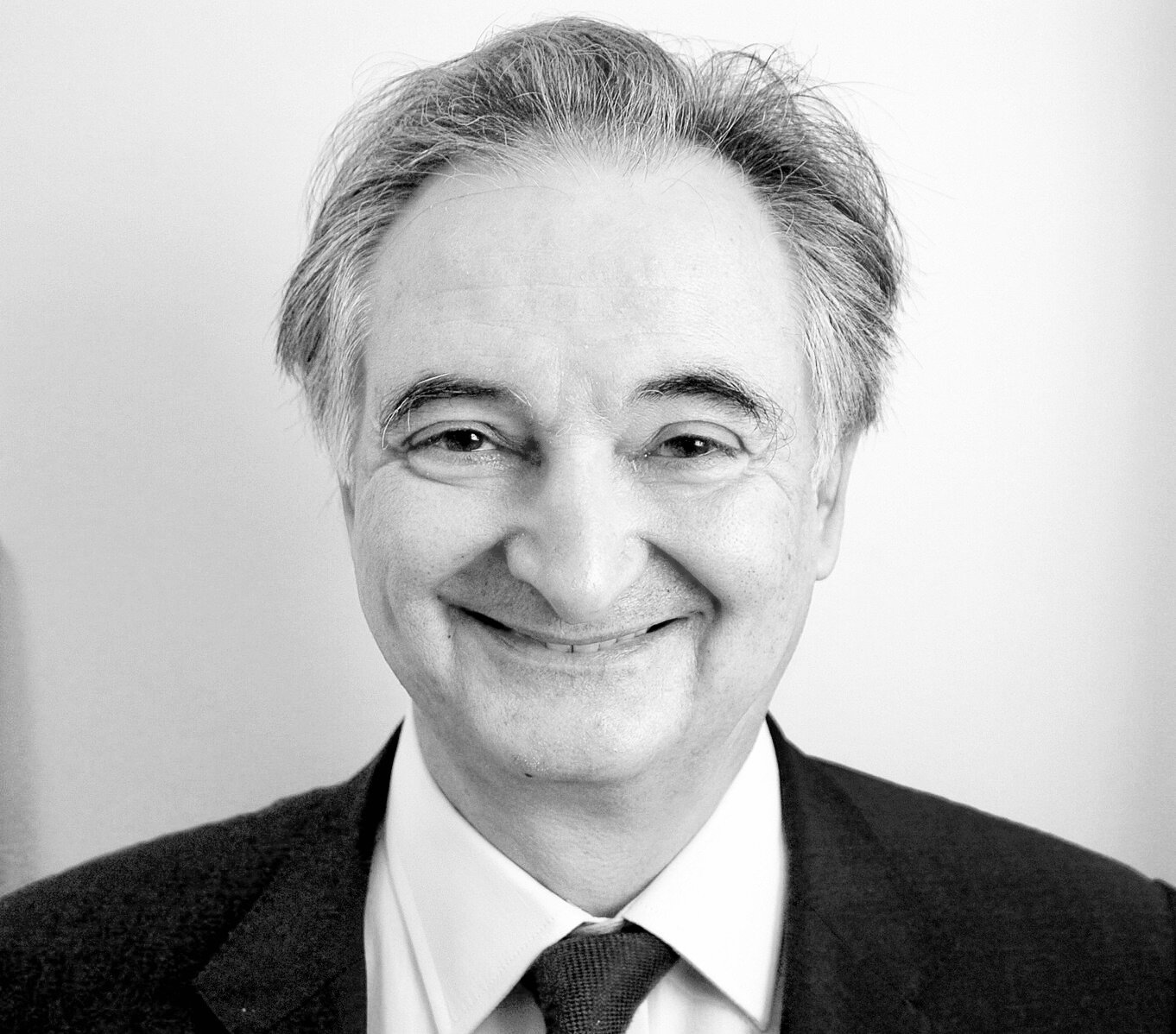
Jacques Attali, member of the “Club des Dix,” closely linked to figures like Edgar Morin, Michel Rocard, Henri Laborit, and Michel Serres, sherpa of French President François Mitterrand (1981-1991), and first head of the European Bank for Reconstruction and Development (1991-1993) published Philosophie de la gratitude: Soyez toujours reconnaissant, soyez parfois ingrat (2025).
You’ve chosen to center your reflection on the concept of gratitude. This term, whose etymology remains somewhat obscure, stands apart from more established notions in moral and political philosophy. Why did you privilege gratitude over concepts like altruism in Emmanuel Levinas or recognition in Axel Honneth?
Jacques Attali: Personally, I’ve done a lot of work around altruism, particularly what I’ve called interested altruism—the idea that it’s in our interest to be altruistic. I’ve written extensively on this. But the word gratitude came to me by way of its opposite: ingratitude, which I’ve come to see as a key source of antisemitism. This idea—that antisemitism stems from a deep ingratitude toward the people who brought the world the concept of God, the Messiah, Jerusalem, the sacred text, and who were, by force, made creditors—led me to broaden the reflection. I began asking in which situations we feel gratitude, and which ones provoke ingratitude. I noticed that for ancient Greek and Asian philosophers alike, ingratitude was a deeply embodied concept.
There’s also the Hebrew word Yehudi, which means “the one who gives thanks.” But thanking is not quite the same as feeling gratitude, is it?
Jacques Attali: True. Gratitude is an internal experience. Thanking is an external act. Not expressing it—not thanking—is already a problem.
Your book opens with a quote from Corneille: “We hate to see the ones to whom we owe everything.” by Arsinoé about her son Nicomède, who saved the kingdom. Is that the power of baroque theatre ?
Jacques Attali: Corneille—like Shakespeare and other playwrights—touches on ideas already explored in Roman and Greek thought. You’ll find similar ideas in Cicero, Suetonius, or Seneca. This idea that gratitude is essential for a society to function well—because it creates healthy relationships—but also that it’s fundamentally unnatural to humans. We don’t like being in someone’s debt, whether moral or material. I’ve observed that so often that I felt compelled to reflect on it—and on the many forms of gratitude: toward those who help us, toward God, family, nature, even future generations. Gratitude in itself—gratitude for the sake of gratitude—opens up vast possibilities. In intellectual history, we often see that when societies no longer feel compelled to show gratitude, dictatorships collapse. Because dictators demand gratitude, they impose it. Whereas in a democracy, a leader must justify their request for gratitude.
Does 1970s multidisciplinary philosophy owes a debt of gratitude to figures like John von Neumann, Herman Kahn, or Oskar Morgenstern ?
Jacques Attali: Those were my teachers. Still are. I read Herman Kahn back in the ’70s—maybe even the ’60s. Von Neumann, for me, is a master of mathematics, a founding figure of probability theory and game theory. I learned a great deal from them all.
A new reactionary movement, the “dark enlightenment,” represented by Nick Land, Peter Thiel, and Curtis Yarvin, curiously, claim René Girard as a reference. Is there really any overlap between mimetic theory and political reaction? Or is it more a way to say: “There was more to French theory than Derrida—there was also Girard”?
Jacques Attali: It’s mainly a case of appropriating a Christian and Catholic thinker for ends that are eschatological. For Bannon, who claims Catholicism, this was key. Girard didn’t initially center Christianity in his work, but it became central over time. It’s ironic—they’re not really his disciples; they’re subjects to whom his theory can be applied. This also reveals how American society, as Tocqueville noted, is a society of identical individuals. Tocqueville already foresaw this as a danger—a breeding ground for future dictatorship, which may now be unfolding. Figures like Yarvin or Vance see in the foreigner the ultimate scapegoat. So again, they’re not Girardians—they’re textbook cases for Girard’s theory.
President Emmanuel Macron, who once worked with Paul Ricoeur, is sometimes called the “President of Memory.” He seems to have a powerful sense of memorial politics. Would you say memory is deeply tied to the idea of gratitude?
Jacques Attali: Absolutely. Memory is consubstantial with power. To feel legitimate, power must appropriate the memory of the people it governs. The more fragile the power—say, a five-year term with little social grounding—the more it clings to manufactured memory as a way of rooting itself in national history. Napoleon did this by linking himself to the royal tradition. So did de Gaulle, Pompidou, and later presidents—all constructing memorial policies as political foundations. François Hollande, too, was a “President of Memory.” Macron hasn’t invented this; he’s continuing the tradition.
You mentioned the link between power and memory decades ago—in Bruits and in your conversation with René Girard on France Culture. By distinguishing noise from music, and stating that music relates to power, you placed art with regard to memory.
Jacques Attali: Yes, art—and music especially—is a repository of memory. As Proust and many others have noted, once you’ve read a book or heard a piece of music, you can never revisit it without recalling the moment you first encountered it. Art roots us in time. It links the work to a moment, to a life experience. In that sense, it gives meaning to time. Gratitude emerges here too: toward the nation, the culture, the heritage. Patriotism is a form of gratitude. We’re grateful for cathedrals, literature, everything that forms our identity. Gratitude for art is a way of sinking our roots deeper into the past.
Michel Berger, a friend of yours and a former philosophy student, was one artist who had a clear political impact (editor’s note: L’Esthétique de la pop musique, including a comparative study of two Jimi Hendrix albums). Would you say the late ’70s marked a moment of collective gratitude, perhaps even communion?
Jacques Attali: That’s when I met him—just after I published Bruits. Our friendship lasted until his death. He was, as you said, a true intellectual—humble, discreet, yet capable of giving his work, often rooted in personal tragedy, a universal reach. Yes, that era—the 70s—was a time of musical liberation, of hope. Writers and musicians shared a common space for wonder and belief in the future.