A Moroccan Journalist
Magal’s ‘Moroccan monkey’ is Netanyahu’s Israel speaking
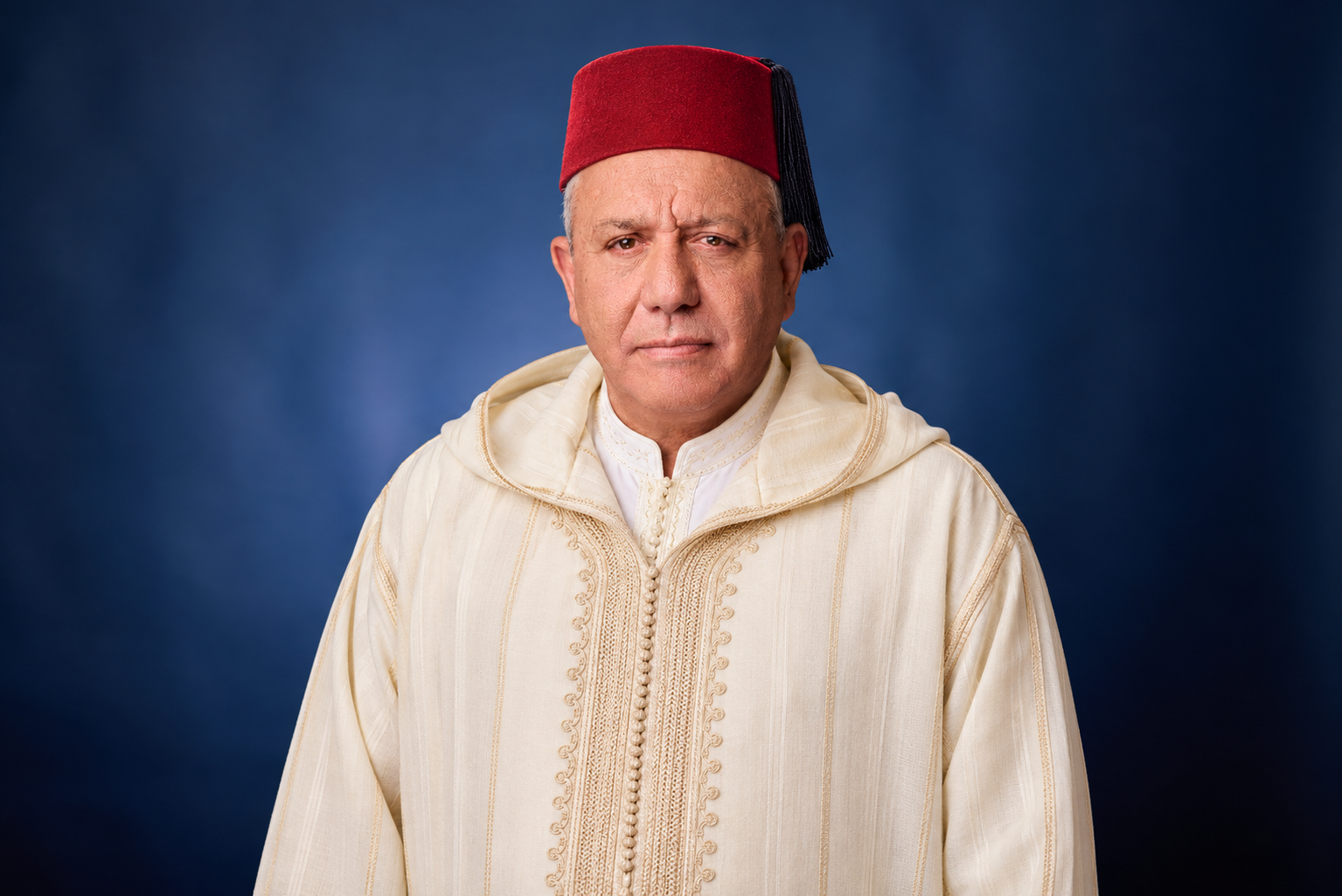
AI-generated illustration of Israeli politician Gadi Eisenkot wearing a traditional Moroccan fez and djellaba, highlighting his Moroccan heritage.
On Saturday night, on the flagship panel show of the network that has spent years serving as Benjamin Netanyahu’s in-house megaphone, Yinon Magal looked into the camera and called Gadi Eisenkot a monkey. He did not misspeak. He repeated it. Eisenkot, he told viewers of “The Patriots,” was a “Moroccan monkey,” installed by “elitist Ashkenazim” who manage him and feed him his lines.
The target of that slur spent four decades in uniform and rose to command the Israel Defense Forces (IDF). He buried a son killed in Gaza. And with eight days to go before Israelis vote, he is the man most likely to end the Netanyahu era. In successive polls since the summer, he has emerged as Netanyahu’s chief rival, with Yashar edging ahead of Likud to become the largest party in several recent surveys.
That last fact explains the first. Yashar put it plainly: the fear of losing has exposed what this camp really thinks of a population it has looked down on for decades.
Magal is no stray voice. In August, he mocked the talk of Eisenkot’s mother, “with her head covering and her Moroccan accent,” and then lectured that the true test of a man “isn’t who your parents are, but who your children are.” He delivered that line about a father whose son fell in combat.
On the eve of the third anniversary of October 7, he branded people who blamed Netanyahu for hostage deaths “the most despicable people who live in the State of Israel,” naming members of the Bibas family and the widow of Ron Arad. Bereaved families one week, a Moroccan-born general’s son the next. This is not a series of slips. It is a method.
Israelis of Moroccan descent number close to a million. They know this method intimately. Their parents and grandparents were sprayed with DDT on arrival, warehoused in transit camps, and dispatched to development towns on the margins of the map.
In 1981, Dudu Topaz sneered at them from a Labor rally stage, and the insult helped keep Menachem Begin in power. Begin understood what the old establishment never did: that Mizrahi Israelis wanted dignity before they wanted anything else. Likud built itself on that understanding. Mizrahi voters have carried it through every election since.
Now the prime minister’s most loyal broadcaster calls one of their sons a monkey. Note the full shape of the insult. It is not only that a Moroccan is an animal. It is that a Moroccan cannot possibly be his own man, that any Mizrahi who rises must be someone else’s instrument. Israel has never had a Mizrahi prime minister. Magal has now explained, on air, why his camp intends to keep it that way.
Eisenkot answered with precision. He would not engage with “this level of vulgarity,” he declared, because the problem was not Magal but “the person behind him.” He is right. Channel 14 is not the fringe of the Netanyahu ecosystem. It is its center. It is the outlet where a prime minister who has spent much of the past three years dodging independent journalists feels at home.
Netanyahu does not need to utter these words himself. He needs only to keep the people who do on his side of the screen, and to say nothing when they speak. Yair Lapid was right to call out the silence from Netanyahu and his ministers. Silence from a leader who issues statements over hostile tweets is not neutrality. It is consent.
Consider what this tells Israelis about how such a government sees everyone else. A coalition that tolerates this contempt for its own Mizrahi citizens, its own voters, its own bereaved, has already shown how it regards Arab citizens, Palestinians, and neighbors. Itamar Ben-Gvir and Bezalel Smotrich did not invent dehumanizing rhetoric in Israeli politics. They were simply handed ministries for it.
Nothing excuses October 7. Hamas alone carries the guilt of the slaughter its men committed. But dehumanization is never a one-way street; contempt breeds contempt, and extremism on one side feeds extremism on the other.
For decades, Palestinians have lived under an occupation that is brutal, humiliating, dispossessing, and relentless: demolished homes, uprooted olive groves, night raids, checkpoints that turn a ten-minute trip into a day’s ordeal, and settlers who burn villages while soldiers stand by.
Netanyahu’s governments did not merely tolerate this machinery. They expanded it, funded it, and rewarded its most fanatical operators with ministries. A people denied every horizon will produce the movements that promise to tear down the walls by any means. That was true long before Hamas, and it will remain true long after it.
Here lies the double standard Israel’s friends rarely confront. Islamist radicalization is diagnosed as a pathology, the product of a backward faith and a backward culture. Jewish radicalization is filed under coalition politics.
Ben-Gvir was convicted of incitement to racism and support for a terrorist organization, and kept a portrait of Baruch Goldstein, the murderer of 29 Palestinian worshippers in Hebron, on his living-room wall. Smotrich called for the village of Huwara to be wiped out. Neither was shunned. Both were given the keys to the state. Extremism in a minister’s suit, speaking the language of Western parliaments, is still extremism. The fanaticism of the hilltop youth is no more enlightened than the fanaticism of the men they claim to be fighting.
Netanyahu treated Hamas as a manageable asset and the Palestinian Authority as the true adversary. He waved through Qatari cash, sold Israelis on the fantasy of “managing” the conflict, and governed as though the people across the fence did not merit serious thought. The cost of that arrogance was paid in the communities of the Gaza border. A leadership that cannot see other human beings clearly will, sooner or later, fail to see the threat coming.
Morocco is watching, too. The 2020 normalization rested on something real: centuries of shared history, a Jewish heritage Moroccans regard as their own, and a diaspora in Israel that still speaks Darija at the Shabbat table. That diaspora is the human bridge between two states. When the prime minister’s favorite broadcaster turns “Moroccan” into a punchline, Rabat hears it. Partnerships are not sustained by press releases. They are sustained by respect, and respect begins at home.
October 27 is Israel’s first national election since the catastrophe of October 7. It offers a choice that is unusually clear. On one side stands a prime minister who has refused to accept a state commission of inquiry into the worst day in his country’s history, and a media apparatus that answers grief and dissent with slurs. On the other stands a candidate who has made accountability for the failures that allowed the October 7 attack central to his campaign.
The answer to “Moroccan monkey” is not outrage on social media. It is a ballot. On September 23, Morocco made history by electing a parliament that would pave the way for the appointment of its first female head of government, Fatima Ezzahra El Mansouri. Israel, too, stands before the possibility of a historic first: a prime minister of Moroccan descent. The symbolism would be difficult to miss. Two countries connected by centuries of shared history could, within weeks of each other, witness political milestones once considered improbable.
For Israel, the question is whether that possibility will become reality, or remain another reminder of the distance between the Mizrahi community’s electoral weight and its representation at the summit of political power. The Mizrahi Israelis whom Likud has taken for granted for half a century hold that answer in their hands. They can deliver it in eight days, and close an ugly chapter that has gone on far too long.
Related Topics
Related Posts