
Miluim Has Four Children Too
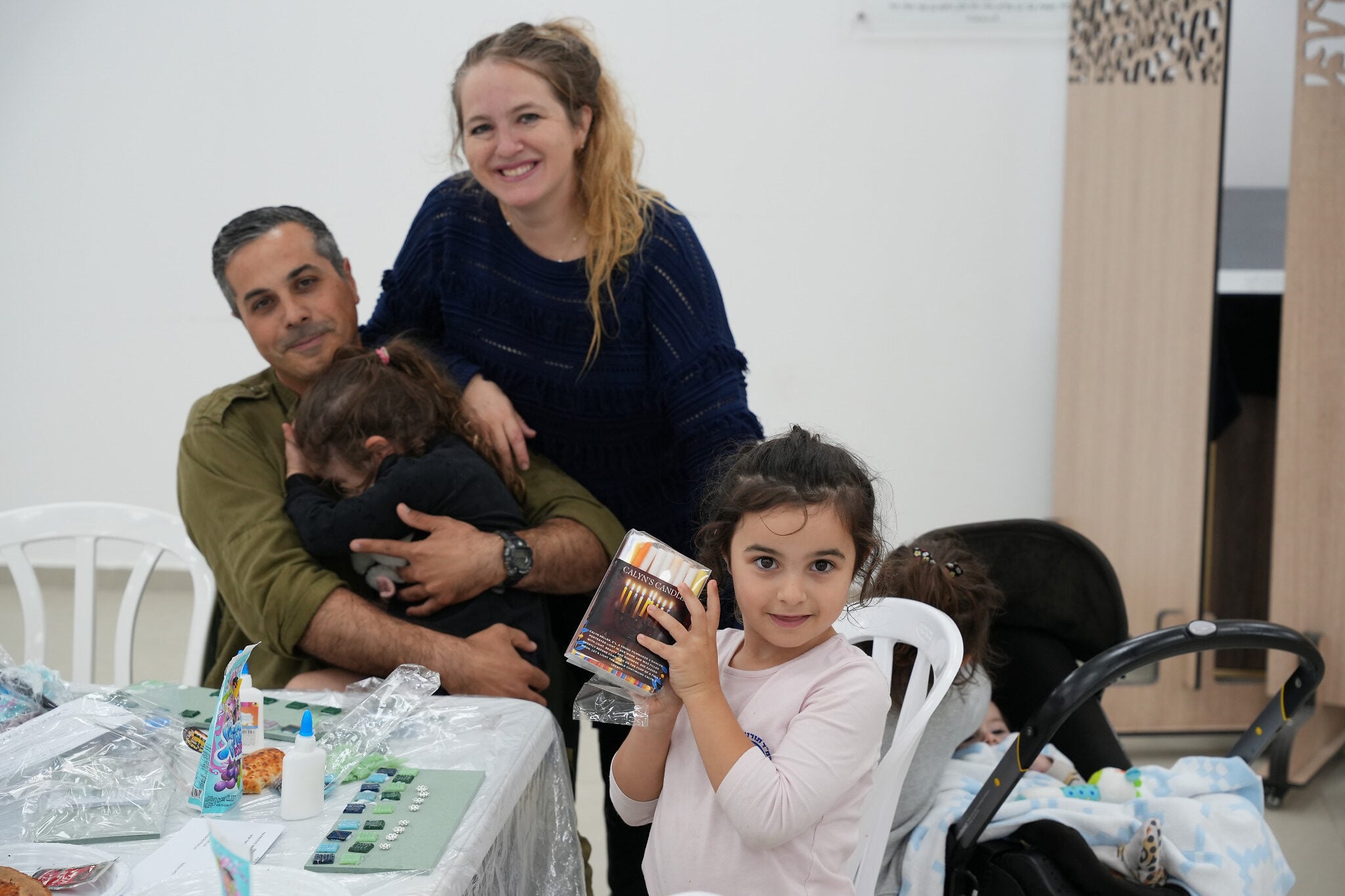
Four children
A few weeks ago I wrote about turning in my gun after 153 days of reserve duty. Then I wrote about the miluim wife who lives in two worlds. This one is about the people in our homes who never got a vote: the kids.
Every Pesach we read about four children. The wise one, the wicked one, the simple one, and the one who doesn’t know how to ask. Each one hears the same story in a different way.
After three years of call-ups, our homes have four children of their own. When the guys in my unit talk about home, these are the four we keep coming back to. Same war, same absent father, four very different costs.
The baby who grew up on a screen
The first child was a newborn or an infant when the call-up came. When his father left, he couldn’t hold up his own head. Now he walks across the living room and says words nobody taught him on purpose.
His father missed all of it. The first time he rolled over. The first step. The first “Abba,” which may well have been said to a phone screen. Those moments only happen once, and he heard about them in a WhatsApp video on a base in the south.
Then comes the homecoming nobody prepares you for. The father walks through the door, arms open, and the toddler hides behind his mother’s legs. To that child, this tall man in the uniform is a stranger. It can take weeks before he reaches for his father without crying. The guys who have lived through that moment call it one of the hardest parts of the entire service.
The young child who needed a father
The second child is somewhere between five and eleven. Old enough to know exactly who is missing, young enough to need him every single day.
This child needs the most help, and for months he lived in a single-parent home. He needed someone to wrestle with, someone to set the limit and hold it, someone to take him to the park so his mother could breathe. Instead, he had one exhausted parent doing the job of two, and he tested her on everything. Bedtime, screens, homework, the way he spoke to his siblings. He pushed his mother to her limits because some part of him was angry, and she was the one who was there.
The hardest moment for this child comes at the end of a home leave. Dad finally walks in, the house settles, everyone sleeps a little better. Then Sunday morning comes, the bag goes back on his shoulder, and the whole cycle starts again. Each goodbye is harder than the last.
The teenager who missed the milestones
The third child is a teenager, and teenagers keep score.
The bar mitzvah trip with Abba got postponed, then postponed again, then quietly dropped. The bat mitzvah was celebrated, but her father came in from base the morning of the party and left the next day. He missed the school ceremony, the final game of the season, the first real heartbreak, the night she needed someone to drive her home.
Teenagers rarely say any of this out loud. They shrug and say it’s fine. Then they spend more and more time out of the house, and when their father finally comes home, they’ve already learned to run their lives without him.
The child who became a soldier
The fourth child was in high school when the war started. Three years later, he has a beret, a rifle and a unit of his own. He grew up into an adult while his father was away serving.
Some of these kids enlist with something to prove. They watched Abba pack his bag again and again, and they want to be just like him. They ask for the same unit, the same kind of job. A father feels enormous pride at that, mixed with a fear he never expected to feel from the other side.
Other kids come out of these years angry. Angry at the army that kept taking their father. Angry at the birthdays and holidays it cost them. Some of them walk into their own service carrying that anger, and that is a heavy thing for an eighteen-year-old to bring onto a base.
Either way, father and son now share something new. Sometimes both are in uniform at the same time, and the mother at home waits for two messages instead of one.
A single-parent house
Whatever their ages, all four children grew up in the same kind of home: a single-parent house with a father’s name on the door.
The mother in that house fights on every front at once. Work, meals, carpools, homework, the worry about the border. At some point, she runs out of strength for the small battles. The screen time limit slides. Bedtime gets later. The rule about phones at the table quietly disappears. She gives in because she simply can’t fight anymore, and nobody who has carried that load would blame her.
The kids feel the stress in the house, even when nobody names it. So they leave. They’re always at a friend’s place, where dinner is calm and both parents are home. Older kids push limits to see whether anyone will push back. Some rebel outright. Every family in my unit has its own version of this story.
Two parents again
Then the father comes home, and the whole family has to learn something new: how to have two parents again.
For three years, the house ran on its own system. The kids learned which rules were real and which ones Ima was too tired to enforce. Now a second parent walks in with his own expectations. He wants dinner together at seven. He wants the phones off at the table. He wants to know where everyone is going on Thursday night.
To him, that feels like being a father again. To the kids, it feels like a stranger changing the rules of a house that worked fine without him. The toddler cries. The young child tests him the way he tested his mother. The teenager rolls her eyes. The soldier, home for Shabbat, reminds him that he’s an adult now.
Every change has to be negotiated. The parents need to agree on which rules come back and which ones stay gone, and they need to present a united front after years of one of them making every call alone. That takes time, patience and a lot of humility from the father who just walked back in.
What the rest of us can do
These kids are in our kids’ classes, on our kids’ teams, at our Shabbat tables. Here’s where the rest of us come in.
If a neighbor’s husband is on reserve duty and she has a seven-year-old at home, take him along to the game with your kids. Be the father figure for an afternoon. If you’re a teacher or a coach, know which kids in your class have a parent on reserve duty, and give them a little extra patience when they push. If you’re a parent, keep inviting the teenager whose house has gone quiet, and keep an eye on the one who’s at your place every single night.
And when the father comes home, give the family room. Reintegration takes months, and the kids feel it most.
The Haggadah tells us to answer each child according to what that child needs. Our homes need the same wisdom right now, from all of us.
To help reservists and their families reconnect after service, support our 2027 reintegration campaign. To learn more, or to share general feedback, please email me at aron@smilesforthekids.com.