Russian-American-Israeli Palestinian. Palestine is Israel.
Sarah, I Am a Palestinian Jew
Video Caption: “Sarah, Je suis Juif Palestinien” (French) — “Sarah, I Am a Palestinian Jew.” Lyrics, music, and performance: Willy Lipschutz / William Lip.
When “Palestinian” Meant Jewish – a Lullaby, a Memory, a Legacy
Some stories don’t argue — they remember. They remind us that long before bureaucracies, propaganda machines, and UN agencies attempted to rebrand “Palestine,” Jews themselves used the word with pride and without hesitation. Not as a political gambit, not as a provocation, but as a self-evident truth.
Willy Lipschutz — also known by his artistic name William Lip — is one of those reminders.
A retired pediatrician, author, poet, singer, and songwriter, Willy was born on November 28, 1950, in Antwerp, Belgium, into a family that survived the Shoah. He was educated in a Jewish school, active in a Zionist youth movement, and deeply formed by the melodies, fears, and hopes of a Europe where Jewish identity was both fragile and indestructible.
When he read The Palestinian Identity Manifesto, Willy did not need an academic debate to understand it. He remembered something older and purer: a Yiddish lullaby his mother used to sing to him when he was a little boy:
Yiddish:
Mir vellen essen pomeranzen
und dabei a hora tanzen,
frei frei Palestina
frei frei.
English translation:
We will eat oranges
and dance the hora,
free free Palestine
free free.
There is nothing ambiguous about this. In Jewish homes in Europe — well before the modern political abuse of the term — “Palestina” meant the ancestral Jewish homeland. The Jewish homeland where oranges grew, where the hora was danced, and where “free” meant freedom from foreign colonial rule.
Inspired by this memory, Willy wrote a song in 1981 in French:
“Sarah, je suis Juif Palestinien.”
English translation:
“Sarah, I am a Palestinian Jew.”
And the refrain that summarizes millennia of identity in a single sentence:
“Je suis Juif Palestinien voilà bientôt 2000 ans.”
English translation:
“I am a Palestinian Jew for almost 2,000 years.”
In 1981, this was not controversial. It was obvious.
He submitted this original version to the Belgian authors association SABAM in 1992 — a timestamp that no modern revisionist narrative can erase.
The 1981 Original Lyrics
(Transcribed exactly as written by Willy Lipschutz / William Lip)
SARAH
Réveille-toi ma petite Sarah
Prends ton frère Chmoul avec toi
Sur les chemins de diaspora
Par la route de Treblinka
Rejoins vite Dov et Moché
Sur la route près du gué
Car les mains de Mardoché
Tiennent un corps inanimé
Revenants ressuscitants
Trébuchant et frémissants, sanglottant et rugissants
Les âmes de Judée sont là comme une armée d’ombres
Des ombres des soldats, des soldats comme des ombres,
Pour sauver la Judée pour bâtir Jérusalem
Bechana haba biyerouchalayim, l’an prochain à Jérusalem
Je suis Juif Palestinien
Voilà déjà bientôt deux mille ans
Exilé en diaspora, j’attends le jour qui vengera mes pères
Jérusalem la Juive, je ne t’ai pas oublié
Au nom de tous les miens
Je ne permettrai pas de te perdre à nouveau
Mille chemins s’étalaient là sans fin
Mais celui-là m’a mené jusqu’à toi
Une colombe nichait dans l’ombre
Quand j’ai prié
Elle s’est envolé
Ces quelques paroles
Avec elle s’envolent
Chalom sur toi
Jérusalem des rois
Mille chemins s’étalaient là sans fin
Mais celui-là m’a mené jusqu’à toi
Lekh-le’ha meartse’ha oumi beth avi’ha
Demain nos enfants nous maudiront
De n’avoir pas eu le cran
Aujourd’hui le soleil brille
Le monde entier nous envie
Mais attention à demain
Car la nuit et le brouillard
Retomberont sur nous à jamais…
“Nacht und nebel, nacht und nebel…”
Réveille-toi ma petite Sarah!
W. Lip
1981
I’m going to Palestine
Willy’s song is not an isolated expression. There are Yiddish songs about Jewish longing for homeland or homecoming that predate and parallel his work.
One notable example is “Ikh fur kayn Palestine” (I’m going to Palestine), sung in ghettos with Zionist imagery and even references to planting oranges in the imagined land.
This song is especially interesting because its imagery — the hope, the oranges, the connection to Palestine — resonates thematically with the verse Willy remembered from his mother. While the words differ, the underlying sentiment is the same: a yearning for a Jewish homeland, carried in song across generations.
Why This Matters Today
Willy’s song is more than memory; it is testimony — bearing witness and exposing falsehoods by its very existence.
Before UNRWA, before Soviet propaganda, before the term was weaponized against the Jews, “Palestinian” referred overwhelmingly to Jews.
- Jews called themselves Palestinians.
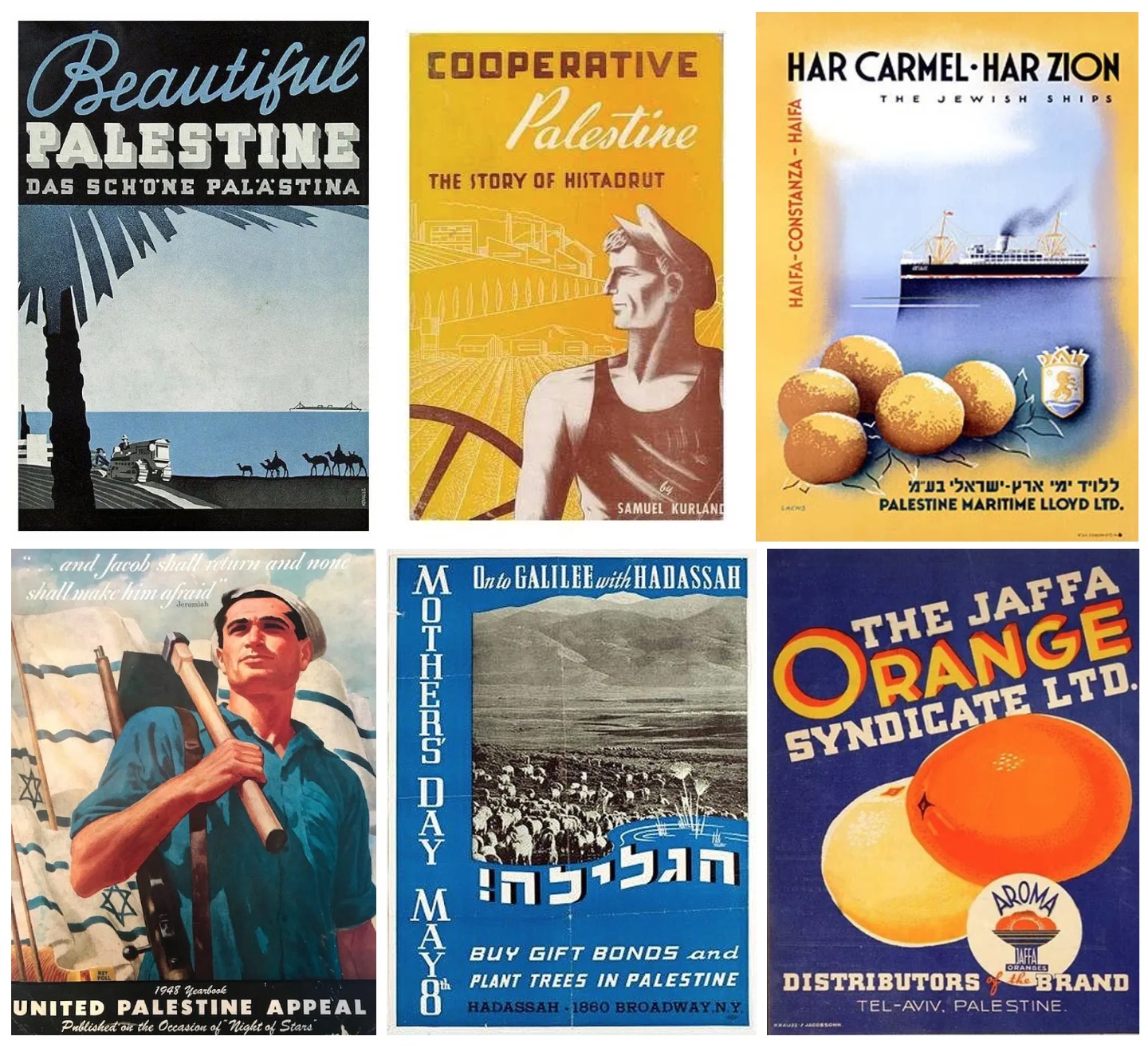
- Jews proudly displayed “Palestine” on their stamps, businesses, and newspapers.
- Jews even sang “Frei Palestina” (Free Palestine) in their lullabies.
Willy’s song captures this identity in its clearest and most unassailable form: a Jewish child in postwar Europe, hearing from his mother that Palestine is home.
It is not a political claim. It is a cultural memory, a family heirloom, a pre-propaganda truth.
And it is impossible to dismiss.
History Carried in Song
When Willy wrote:
“Je suis Juif Palestinien voilà bientôt 2000 ans” (I am a Palestinian Jew for almost 2,000 years),
he was not inventing something new. He was describing something ancient.
A Jewish child in postwar Belgium could call himself a Palestinian Jew because:
- Jews are the indigenous people of Palestine.
- “Palestinian” was historically a geographic term applied primarily to Jews.
- The Jewish world used the word naturally, affectionately, unambiguously.
- Only decades later did it get politically hijacked by The Clientele.
His song is living evidence — not theory, not rhetoric — that the Jewish meaning of “Palestine” was alive well into the late 20th century.
The world has spent decades trying to erase this.
Willy’s song “Sarah, I Am a Palestinian Jew” — and his mother’s lullaby — restores it instantly.
Conclusion: A Name Returned Home
It is more than a song title. It is a declaration that predates today’s narrative wars by generations.
One lullaby, one mother’s voice in Yiddish, one French song in 1981 — all quietly preserve a truth that millions are now fighting to remember:
The real Palestinians were Jews.
The real Palestine was Israel.
Reclaiming these words is homecoming.
See Also
Related Topics
Related Posts