The Reachable Jew
Lithuania escalates to the maximum instrument its reach allows. Against the unreachable, the instrument is defamation. Against the reachable, it is criminal indictment. The variable is range, not speech.
Lithuania did not begin prosecuting Artur Fridman when prosecutors filed 220 pages against him. It began prosecuting him when it took away his ability to leave.
On January 8, 2025, Lithuanian authorities imposed a written pledge restricting Fridman from leaving the country. Before the indictment, before the trial calendar, before the courtroom, the state established the fact that mattered most. This Jew was reachable.
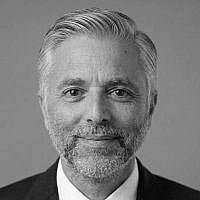
The indictment came nine and a half months later. On October 30, 2025, the Vilnius District Prosecutor’s Office filed a 220-page indictment in Criminal Case No. 02-2-00512-24 under Article 170² §1 and Article 313 §2. The charged conduct was a Facebook post made on May 9, 2024, at Antakalnis Cemetery, where Fridman honored his grandfather Aron Fridman, a Jewish Red Army veteran who fought Nazi Germany.
May 9, 1945 marks the defeat of Nazi Germany. It also marks the end of the wartime order under which Lithuanian perpetrators murdered Jews with impunity. A Jewish Lithuanian citizen marking that date at his Red Army grandfather’s grave is precisely the speech Lithuania’s memory apparatus cannot tolerate.
Three days ago in The Soviet Court That Never Left I named the territorial axis: reputational attack outside reach, criminal procedure inside reach. This article names what that axis is. It is state targeting by jurisdictional vulnerability, and it raises a question Jewish institutions can no longer postpone.
The variable is not the speech. The variable is reach.
Lithuania uses one register against the Jew it cannot reach. Defamation. Denunciation. Professional pressure. Public branding. Bureaucratic erasure. Against the Jew it can reach, it uses another register. Travel restriction. Indictment. Compelled appearance. Legal cost. The threat of imprisonment.
The statute does not change. The direction changes. Article 170² §1 is closed when the speaker is aligned with state memory. It is open when the speaker is a reachable Jew. Lithuania could not operate that direction across borders. Now it can operate it at home.
That is not rule of law. It is maximum-instrument governance. Lithuania escalates to the harshest instrument its jurisdiction allows.
Silvia Foti is not reachable. She is a United States citizen who exposed her grandfather Jonas Noreika’s role in the murder of approximately 14,500 Jews of the Šiauliai district in Storm in the Land of Rain. Lithuania did not indict her. It could not. LGGRTC’s October 1, 2018 court filing attacked her credibility by name — not born at the time, not a historian, supposedly without proper methodology. That was the maximum instrument available against a granddaughter outside Lithuanian reach.
Efraim Zuroff is not reachable. The Simon Wiesenthal Center’s chief Nazi-hunter has long been called the most hated man in Lithuania. Lithuania’s earlier extradition pursuit of Yakov Dushansky supplied the predicate. Dr. Zuroff called that request insolence. The record sits in Selective Justice.
Michael Kretzmer is not reachable. His film J’Accuse! put Lithuania’s Holocaust record on screen town by town. Lithuania did not indict him. The available instrument was hostility.
Eugene J. Levin is not reachable. He produced Baltic Truth and has written across more than a dozen Times of Israel pieces on Lithuania’s Holocaust evasions and the Fridman prosecution. Lithuania does not reach Boston. The available instrument is dismissal, not custody.
I am not reachable. Former Defense Minister Arvydas Anušauskas supplied the trash and enemy of the state register. Current Defense Minister Laurynas Kaščiūnas extended it in February 2025 with trash and agent of Russia. Kaščiūnas pressured the historian working on the Noreika file seven times. LGGRTC’s own genocid.lt page publicly branded me a criminal. LGGRTC publicly raised possible constitutional and criminal-code infringement against me. The courts imposed a €950 cost order in Case eA-1768-624/2020. That is the maximum unreachable instrument. Lithuania does not reach Los Angeles.
Rūta Vanagaitė was reachable. She is a Lithuanian citizen who lived inside Lithuanian jurisdiction. After Mūsiškiai, her collaboration with Dr. Zuroff documenting Lithuanian Holocaust complicity, Alma Littera withdrew her books from circulation. She left Lithuania and stayed away for nearly three years. Lithuania did not indict her. The state did not need to. The criminal instrument was reserved. Social and economic exile did the work. Vanagaitė is the test case the doctrine requires. Against the reachable non-Jewish Holocaust-truth speaker, Lithuania uses the exile instrument. Against the reachable Jewish speaker, Lithuania uses the criminal instrument. The variable narrows. Not only reach, but Jewishness when reach exists.
Fridman is the convergence of both variables.
He is Jewish. He is Lithuanian. He was inside the apparatus. The state could summon him, restrict him, indict him, and force him into court. The same type of historical speech that produces defamation abroad and exile against a non-Jewish Lithuanian produced criminal prosecution against a Jewish Lithuanian.
That is the reachable Jew.
The January 8 travel restriction matters because it shows the doctrine before the indictment. Reach was established by document. The state converted a citizen who could leave into a citizen who could not. Once reach existed, the apparatus deployed the maximum criminal instrument.
The written pledge is the documentary threshold between criticism and custody. A liberal state becomes something else when movement restriction precedes memory prosecution.
Lithuania restrained Fridman for nine and a half months before the indictment was filed. Seventeen months separated the May 9, 2024 Facebook post from the October 30, 2025 indictment. That is the length of state attention Lithuania devoted to one Jew’s graveside speech in a Facebook post.
Article 170² §1 carries up to two years. Article 313 §2 carries up to one year. Lithuania chose both. Both statutes. Stacked.
The proportionality problem is dispositive. Not incitement. Not organization. Not a publication campaign. Not a media company. Not political office. A graveside Facebook post.
The same prosecutorial ecosystem that refused five Article 170² §1 applications against documented Lithuanian Holocaust distortion now houses 220 pages against one Jewish Facebook post. The Rakutis comparator is the live proof. The May 9 frame is established. The mechanics are catalogued in The Prosecution That Didn’t Need to Win, The Prosecution’s Own Evidence, and Verdict First, Reasoning Later. The capacity is not missing. The deployment is selective. That is the doctrine in operative form.
The doctrine is portable.
Every Jewish citizen physically present inside Lithuanian jurisdiction now knows what reachable means. A foreign Jew arriving for a funeral, an archival visit, a conference, a trial, a documentary project, or a family commemoration has converted himself by presence. The written pledge is not the only available instrument. It is merely the one Lithuania used first against Fridman.
The apparatus operates inside Schengen, the European Union, and NATO. Eugene J. Levin has documented the alliance-laundering dimension in NATO’s Holocaust Problem and Lithuania’s EU Membership as Diplomatic Shield. This piece does not re-litigate that record. The alliance is the front-door deceptive lighting. The doctrine is what waits inside.
LGGRTC is expected to testify at the Fridman trial. The prosecution will rely on a state historical institution whose Noreika methodology was publicly rejected by Lithuania’s own Presidential International Commission on April 11, 2019, criticized by IHRA expert chairs the same month, and contradicted by Yad Vashem Chairman Dani Dayan on September 21, 2023 on the floor of Lithuania’s parliament, when he said that Noreika, Škirpa, and Krikštaponis do not add honor to Lithuania. LGGRTC’s own October 24, 2017 letter Ref. 14R-94 admitted in writing that evidence of Lithuanian Nationalist Party Holocaust collaboration had not been comprehensively investigated in twenty years of LGGRTC operations and that such research would be appropriate. Eight months later no investigation had begun. The record does not show that LGGRTC ever conducted the comprehensive investigation its own letter said would be appropriate.
LGGRTC also promoted the false claim that the United States Congress had completely exonerated Juozas Ambrazevičius-Brazaitis. Congressman Brad Sherman corrected that claim in four letters across fourteen years. Lithuania has not retracted.
That is the institution expected to help define criminal memory speech against Fridman.
For this article, the point is narrower than LGGRTC’s full credibility file. Lithuania first protects LGGRTC from substantive accountability. Then it uses the protected institution as evidentiary support against the Jew it can reach.
The Jewish-institutional consequence is unavoidable.
While Fridman remained under restriction and indictment, American Jewish organizations continued engaging Lithuanian officials around Lithuania’s 157-measure Action Plan on antisemitism. In February 2026, Foreign Minister Kęstutis Budrys presented the plan to AJC CEO Ted Deutch. On May 1, 2026, AJC hosted a Lithuanian government delegation in Los Angeles while the Fridman prosecution remained active.
The plan was adopted by a government in coalition with Nemunas Dawn, whose founder Remigijus Žemaitaitis was convicted in December 2025 of incitement to hatred against Jews.
AJC was on notice. AJC chose engagement. The questions are catalogued in The Other Side of Lithuania’s Silence and AJC & B’nai B’rith: The Jewish Community Is Entitled to the Record. They have not been answered. The engagement has continued.
Any Jewish organization discussing Lithuania’s antisemitism plan while this prosecution remains active is not evaluating Jewish safety unless it first addresses the state’s use of criminal law against a Jewish citizen’s memory speech.
The diaspora Jew looking for institutional protection against the next conversion should understand the record. The substitute for protection has been photographs, receptions, action-plan language, and diplomatic access. That is not a defense mechanism. It is cover.
Lithuania did to Foti, Zuroff, Kretzmer, Levin, Dushansky, and me what it could do across borders. Lithuania did to Vanagaitė what it could do inside its borders to a Lithuanian who was not Jewish. Lithuania did to Fridman what it could do inside its borders to a Lithuanian who was.
That is the doctrine.
Fridman walked inside the apparatus’s reach. The apparatus produced the maximum reachable instrument once reach existed. The instrument was always ready. The variable was the body.
The doctrine no longer requires inference. Lithuania has announced it through the Fridman prosecution. One case has become standing notice.
The next reachable Jew is the question Lithuania has now answered. There is no rule-of-law buffer protecting that Jew. There is no Jewish-institutional buffer protecting that Jew. There is the apparatus and the body.
The apparatus knows what it does with the body it can reach.
So do we.