
The Trial of Meta and Our Need for Distraction
The past week has seen one of the world’s most powerful technology companies on trial.
The federal case in Oakland concerned allegations that Meta deliberately designed Facebook and Instagram to addict children, misled the public about their safety and collected children’s personal information without proper parental consent.
The trial ended before a verdict was reached. Meta agreed to pay up to $18 billion over the next decade and introduce substantial restrictions on how teenagers use Facebook and Instagram.
What the settlement cannot resolve
Under the settlement, Meta has agreed to introduce the following protections for teenage users:
- A combined two-hour daily limit across Facebook and Instagram
- No access between midnight and 6am without parental consent
- Most notifications disabled during school hours
- Likes and reactions hidden by default
- Stronger systems to identify underage users
These restrictions are significant. For years, parents have been expected to compete against platforms equipped with enormous quantities of behavioural data and designed to eliminate every natural stopping point.
Cynicism aside, they look like healthy changes, but I’m going to take this to a deeper psychological question: why are we so susceptible to distraction in the first place?
Social media companies did not invent our desire for novelty, approval, belonging or escape. What they have done is learn how to stimulate those desires, measure our responses and supply distraction with unprecedented precision.
Meta was on trial for allegedly exploiting that vulnerability. But I suggest that the vulnerability itself belongs to all of us.
Why distraction feels like relief
A notification is not merely an interruption; it is a promise.
Someone may have responded to us. Something may have happened. There may be recognition, amusement, outrage or information waiting beyond the screen.
Most notifications are unimportant and most posts quickly forgotten. But occasionally something rewards us, and that unpredictable reward encourages us to look again.
Infinite scroll makes the process almost continuous. There is no bottom of the page, conclusion of the chapter or end of the television program. Each movement of the thumb offers another possibility.
Yet these design techniques do not fully explain their power. A product may be expertly engineered to hold our attention, but its designers must have something within us to work with.
Distraction is appealing partly because concentration requires effort and restraint. But it also serves a psychological purpose: it offers relief.
We reach for our phones when we are bored, but also when we are anxious, lonely or uncomfortable. The device fills the pauses in which unwanted thoughts might otherwise emerge. It gives us somewhere else to direct our attention when our inner world becomes difficult to inhabit.
It is not always pleasure we are seeking. Sometimes we are seeking temporary absence from ourselves.
The phone-based childhood
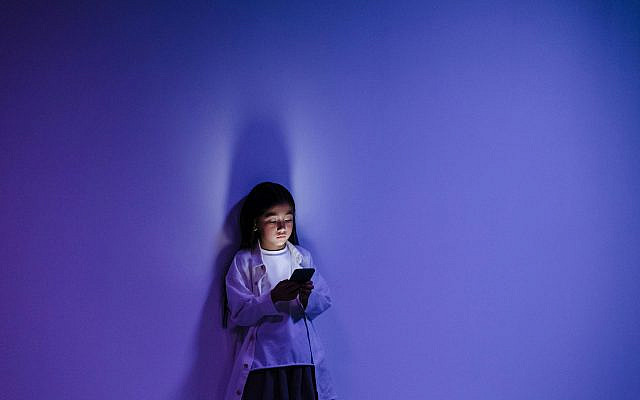
The problem is readily apparent in Israel. A 2024 survey by the Israel Internet Association found that 43 percent of Israeli teenagers wanted to limit their screen time but were unable to do so. Another 39 percent said they were already limiting it themselves. The problem, in other words, is not simply that young people do not recognise the pull of their screens. Many recognise it perfectly well and still struggle to disengage.
Children are especially vulnerable because their ability to regulate attention, resist social pressure and evaluate long-term consequences is still developing.
In The Anxious Generation, social psychologist Jonathan Haidt argues that the play-based childhood, built around physical activity, independence and manageable risk, has increasingly been replaced by a phone-based childhood.
Social media has become one of the places where identity, friendship and social standing are established. Approval appears as likes, followers and reactions. Exclusion becomes visible, while comparison extends beyond friends and classmates to an endless procession of carefully presented lives.
Haidt connects this transformation with rising anxiety, social withdrawal, sleep deprivation and fragmented attention. The extent of social media’s causal role remains contested, as I have previously discussed, but few would dispute that childhood has been altered by an intensely social technology carried everywhere and rarely switched off.
Children have not simply gained screens. Many have lost unstructured play, physical independence and the experiences through which resilience develops.
The phone supplies stimulation while displacing some of the real-world experiences that might make constant stimulation less necessary.
When algorithms learn our weaknesses
Israeli historian Yuval Noah Harari approaches the problem from another direction.
Harari has warned that social media and smartphones can “hack our brains and manipulate our emotions”. Algorithms do not need a complete understanding of human psychology. They only need to discover which stimulus will provoke a particular user to remain, respond or return.
One person may be captured by envy, another by outrage and another by fear. Someone else may respond to beauty, affirmation, gossip or social recognition.
Each pause, click, reaction and share provides information. The system becomes increasingly effective at predicting what will attract the user’s attention.
This is what distinguishes modern distraction from its predecessors. Humanity worried about weakened attention long before the smartphone, as I have written previously. But a newspaper does not rearrange itself after observing which headline makes a particular reader angry. A television program does not immediately replace itself when an individual viewer begins to lose interest.
The algorithm does.
Harari’s concern is therefore not limited to wasted time. If a system can repeatedly direct our attention by stimulating fear, anger or desire, it can influence how we perceive the world. The gradual surrender of attention becomes a surrender of judgment.
What are we trying to escape?
Haidt helps explain how the environment of childhood has changed. Harari explains how technology identifies and exploits our weaknesses. Australian biologist Jeremy Griffith asks an even more confronting question: why is the need for distraction so great?
In his 2021 book Death By Dogma, Griffith argues that technological overuse reflects an “immense need for distraction from overwhelming internal psychological pain”.
In his account, that pain is connected to the human condition: our difficulty in understanding why humans possess the capacity for extraordinary love and cooperation while also behaving selfishly, aggressively and destructively. Griffith argues that this unresolved conflict has produced a psychologically insecure and alienated state from which we continually seek relief.
Whether or not one accepts the full scope of his explanation, it identifies something discussions about screen time often miss. Technology does not only impose itself upon a previously contented mind. It also answers an existing demand for escape.
This helps explain why digital distraction is not confined to children. Adults reach for their phones in queues, lifts, meetings, beds and even during conversations with people they love. Moments that once required patience, observation or reflection are immediately filled.
The smartphone succeeds because it offers an escape that is always available. It does not require us to acknowledge that we are anxious, lonely or unsettled. We can simply tell ourselves that we are checking something.
I have previously described the smartphone as being less like the fire than the smoke produced by a deeper psychological blaze. The Meta case reveals what happens when a commercial system learns how to fan that smoke and profit from our inability to see through it.
The stumbling block
The relationship between distress and technology does not move in only one direction.
An anxious person may seek distraction through social media. Excessive use may then displace sleep, physical activity, concentration and face-to-face relationships. That loss can deepen the original anxiety, increasing the desire for further distraction.
The product and the vulnerability reinforce one another.
Jewish tradition offers a relevant moral principle. In Leviticus 19:14, the Torah commands:
You shall not place a stumbling block before a blind person, and you shall fear your God.
The influential medieval Jewish commentator Rashi explains that this also prohibits giving improper advice to someone who is “blind” regarding a particular matter, especially when the adviser intends to benefit from that person’s lack of knowledge.
The parallel with the attention economy is obvious. A child may know that an application is difficult to stop using. The platform knows why. It controls the recommendation system, possesses the behavioural data and understands which features keep the child engaged.
Recognising that people possess an internal need for distraction does not absolve platforms. It makes the deliberate exploitation of that need more serious.
Beyond the trial
The Meta settlement introduces much-needed friction into platforms that have systematically removed it. Time limits, overnight restrictions and fewer notifications create opportunities to stop.
But a stopping point is not the same as a solution.
Regulation can limit engineered distraction. Parents can establish boundaries. Schools can protect spaces for learning and face-to-face interaction. Communities can help restore play, independence and genuine connection.
What these measures cannot do by themselves is explain why silence feels uncomfortable, why approval feels indispensable or why distraction so often resembles relief.
We need digital environments that are less exploitative and people who are less dependent upon them for escape. We need external protections, particularly for children, and deeper knowledge of the psychological forces operating within us.
Meta may have settled the legal case, but the broader issue remains unresolved. We have put its platforms on trial. The more unsettling question is whether we are prepared to examine the need within ourselves that those platforms have learned to serve so well.