
Winning the War, Losing the Will
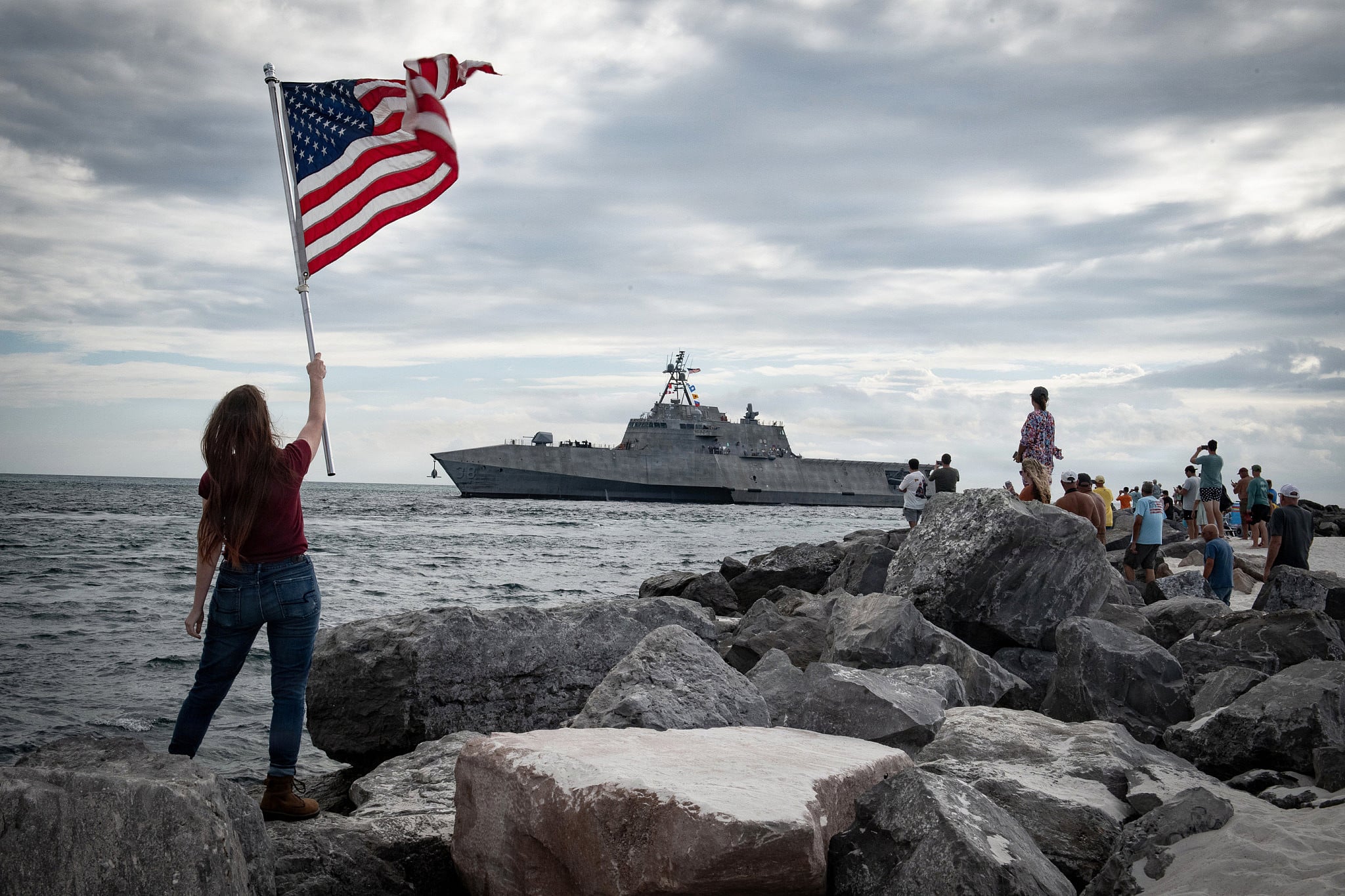
We stand today facing consequential, perhaps even existential, questions about the war in Iran. Yet instead of finding unity, we see a country increasingly fractured. It is a subject close to my heart, as it may test the resolve of this great nation and mark a turning point for our America.
A good friend of mine, deeply troubled by current events, recently expressed sharp criticism of the war and questioned its prospects. She is someone I respect; a principled advocate for causes I strongly support. Her concern echoed the prevailing media tone over the past few weeks. In our conversation, I found myself pushing back on one key idea: that the immediate outcome should not be the primary lens through which we judge the ongoing war.
Outcomes matter, but they should not be the sole yardstick by which one measures a military conflict.
There are moments in history when the reason for going to war is of historic consequence. At such times, the immediate outcome is less critical. History reinforces this idea. In the early months of World War II, The United States suffered devastating losses: from the attack on Pearl Harbor to the fall of Guam, Wake Island, Hong Kong, and the Philippines. Judging from those early months, the war effort appeared doomed. And yet, those early setbacks proved nothing about the eventual victory.
What ultimately mattered was something deeper: the commitment and the unity of the nation behind the war effort. When a society stands behind its armed forces; when it understands the stakes and supports the mission; it dramatically increases the likelihood of victory.
This raises a difficult and uncomfortable question: Does America still possess that level of conviction?
Today, there is a growing sentiment, often amplified in public discourse, which places the blame for global tensions squarely on political leadership; sometimes obscuring the very dangers we face. Regardless of where one assigns blame, recognizing when a threat may be serious and supporting those who risk their lives, should transcend political division.
Let us state the argument plainly:
When the United States decided to confront Iran militarily, it was not solely acting at the urging of an ally, nor even to “free” the Iranian people. For more than a decade, we have tried, through diplomacy, pressure, and agreements, to contain Iran’s nuclear program, yet the problem remains unresolved. At its core, going to war is an act of self-interest rooted in the firm belief that preventing a hostile regime from acquiring catastrophic nuclear capabilities is essential to our national security.
There are legitimate questions about how the war is being conducted and about how decisions are made. However, we should not lose sight of the larger stakes while debating these details.
Our world is tightly interwoven. As demonstrated by the September 11 attacks, events originating half a globe away can have devastating consequences at home. A butterfly flapping its wings in Tehran can, in today’s reality, result in a nuclear warhead reaching our shores.
Yet, despite the magnitude of such risks, we remain deeply divided. Many hold strong opinions about the Iran war, even while acknowledging that we do not have access to all the information. We believe we know enough. But do we? Do we truly have the tools to understand what is happening? Are we being misled? And if so—by whom?
One must remember that public opinion is shaped less by facts than by the ideologies and influences that surround us. Opinions are formed by the sources we trust, the narratives we consume, and the communities we identify with. If we know this, why do we allow ourselves to be misled, time and again?
I have deep faith in people. But I have far less faith in the media. Not every journalist is dishonest, but our news cycle rewards distortion, simplification and exaggeration. It promotes narrative over nuance, and nuance over facts. As has often been said, the media has the power to make good appear evil and evil appear good.
Unlike the ultimately unfounded WMD claims that drew the United States into war with Iraq, Iran’s nuclear threat is documented and verified. One must recognize that defending against a credible, imminent threat is not optional. It is the most fundamental responsibility of any nation. The fact that the United States is divided on this principle, echoes a long-standing tension in our history. Before both world wars, strong isolationist voices argued against intervention; questioning the cost, the necessity, and the risks. Yet, where would the world be had those voices prevailed?
Conversely, America’s willingness to act on the global stage has contributed to the very superpower role it now struggles to define and often seeks to downplay.
These are not simple questions.
Consider, for example, societies like Israel where external threats are immediate and visible. Does a shared sense of danger produce a resilient society, or does a strong, cohesive society create the conditions necessary to withstand those threats? The relationship may run both ways.
Which brings us back to the need for unity to mitigate the risk of constant internal criticism and adversarial narratives which erodes our resilience. Supportive media can unite a society; strengthening it, even at the cost of overlooking temporary setbacks. Conversely, when the media divides us, it magnifies those setbacks, weakening our collective resolve.
So where does the greater danger lie?
What might have happened if the Allies had stopped Hitler in 1936, or acted following the Anschluss in 1938? Earlier action might have prevented the catastrophe that cost over 70 million lives and nearly destroyed an entire continent. Hitler followed a dangerous vision; today, we face a regime whose ambition and rhetoric cannot be ignored.
We must take these threats seriously and navigate this landscape without losing our ability to think clearly, act responsibly, and hold onto what has always been our greatest weapon: our unity.