
Middle East Analyst
Would Trump Refuse to Accept a Midterms Loss?
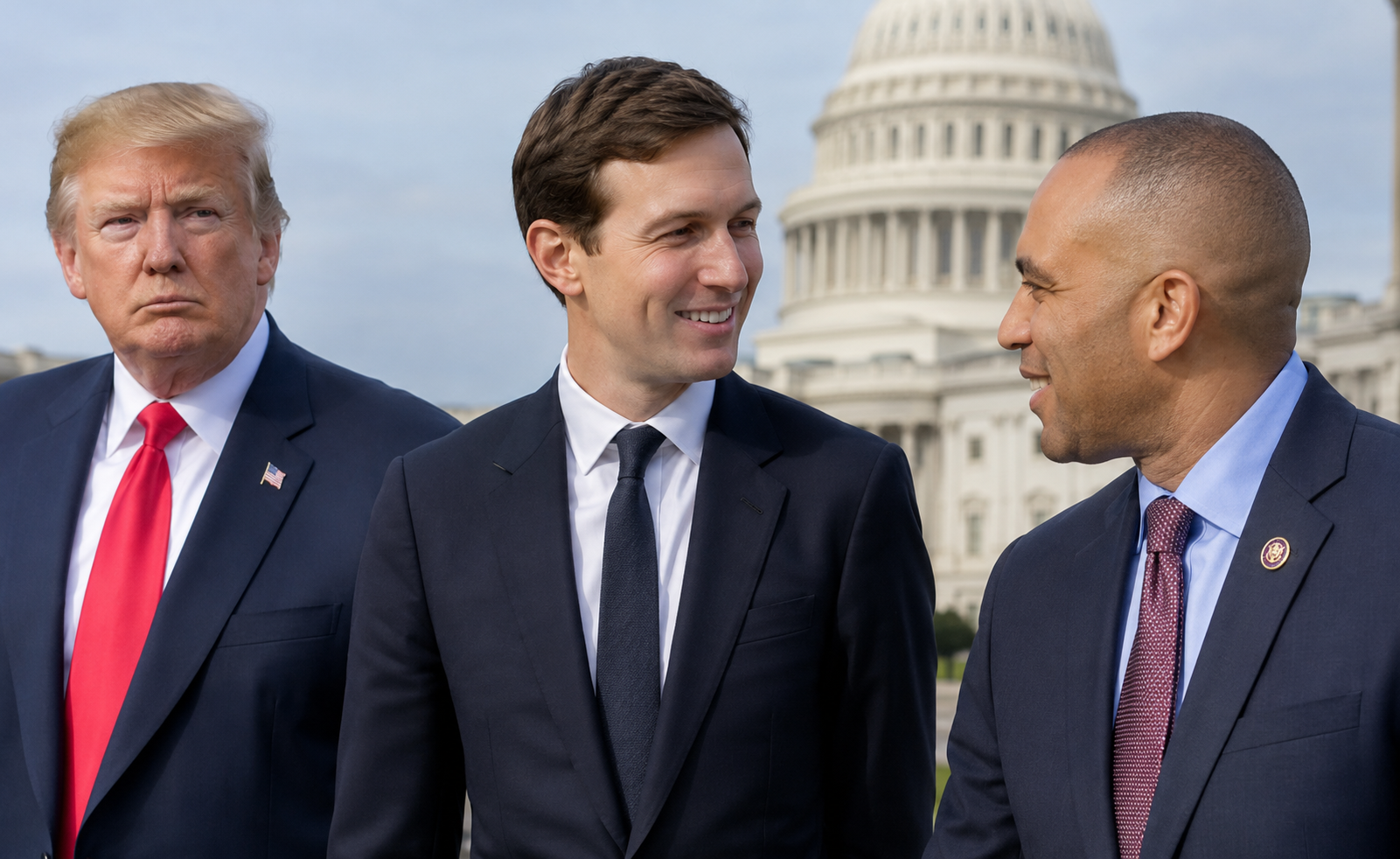
by author (AI)
A president with a precedence
Michael Wolff, the biographer of President Donald Trump, recently argued that if Republicans suffer a major defeat in the November midterm elections, Trump is unlikely to accept the outcome quietly. Recent polling suggests that many Americans share that expectation. A Washington Post–ABC News–Ipsos poll published October 20 found that 70 percent of Americans lack confidence that Trump would accept the results if Republicans lose. Even among Republicans, 36 percent expressed doubts. Trump’s response to the 2020 presidential election provides an obvious reason for those concerns.
Yet focusing exclusively on personality and precedent risks overlooking an important analytical question: Are the structural incentives facing Trump after a midterm defeat the same as those that existed after the 2020 presidential election?
They are not. Past behavior matters, but political leaders also respond to the institutional environment around them. The question is not whether Wolff’s assessment is plausible. It clearly is. The question is whether a different political environment might create incentives for a different response.
Why 2020 Is Not the Perfect Analogy
In 2020, Trump faced the loss of the presidency itself. Defeat meant surrendering executive authority, leaving the White House, and losing the immediate power that came with controlling the federal government. The stakes extended beyond political embarrassment to the loss of his position at the center of American political life.
A midterm election presents a different situation. Even if Democrats regain control of both chambers of Congress, Trump would remain president. He would retain executive authority, control of the federal agencies under his administration, and command authority over the military, subject to constitutional and statutory limits. He would also retain the ability to shape foreign policy and pursue initiatives that do not require congressional approval.
A Democratic victory would create serious constraints. Investigations could expand, legislation could stall, and congressional oversight could become considerably more aggressive. But Trump would not be displaced from the presidency.
That distinction does not mean he would graciously accept defeat or refrain from challenging the results. It means that the incentives surrounding a midterm loss are different from those surrounding the loss of the presidency. The assumption that his response must therefore follow the same pattern deserves examination rather than automatic acceptance.
The Impeachment Barrier
One argument supporting Wolff’s assessment is that a Democratic victory could lead to another round of impeachment proceedings. If Democrats capture the House, renewed investigations and impeachment efforts are plausible. The extent and speed of those efforts would depend on the election results, the conduct under investigation, and the priorities of the new majority.
However, impeachment and removal are not the same thing. Convicting and removing a president requires a two-thirds vote of senators present. Even a substantial Democratic Senate majority would need Republican support to reach that threshold. For example, if Democrats held 54 Senate seats and all senators voted, they would still need 13 Republican votes to convict. Removal would therefore remain a formidable obstacle. Impeachment could damage the administration politically, consume its attention, and complicate its agenda without necessarily threatening Trump’s continued tenure.
This matters because the political environment facing a president who expects to remain in office is different from the environment facing one who has just lost an election that ends his presidency. A hostile Congress could encourage confrontation, but the institutional circumstances would not compel it.
The Abraham Accords Legacy Prize
Another consideration is the potential value of a historic diplomatic achievement. Trump’s Abraham Accords were a genuine but incomplete foreign-policy accomplishment. They established formal diplomatic relations between Israel and several Arab states and demonstrated that limited regional cooperation could advance even without first resolving the Israeli-Palestinian conflict. But the real prize remained out of reach: Saudi Arabia.
Saudi participation would transform the significance of Arab-Israeli normalization because of the Kingdom’s economic weight, religious importance, and regional influence. The existing agreements were meaningful, but they did not produce the broader regional settlement that Saudi-Israeli normalization could represent.
The October 7, 2023, Hamas attack and the subsequent Gaza war reinforced the importance of the Palestinian issue. Saudi Arabia’s Foreign Ministry stated on February 5, 2025, that the Kingdom would not establish diplomatic relations with Israel without a tangible, time-bound, and irreversible steps toward a two-state solution. Despite Trump’s repeated claims that Saudi normalization was close at hand, the Saudis have stood firm in their demand.
The distinction is important. Saudi normalization is not simply another diplomatic agreement waiting to be signed. It requires an outcome that the Saudi leadership can defend politically and that addresses the Palestinian question in a credible way.
A Different Legacy Opportunity
This creates an alternative possibility worth considering. If Trump faced a difficult domestic political environment after a midterm defeat, he might conclude that pursuing a historic diplomatic breakthrough offered a more consequential use of his remaining political capital than engaging in prolonged confrontation with congressional opponents.
The Gaza framework endorsed by the United Nations Security Council in Resolution 2803 on November 17, 2025, provides a potential foundation for that effort. It links transitional governance and reconstruction in Gaza to Palestinian Authority reform and the eventual possibility of a credible pathway toward Palestinian self-determination and statehood.
Full implementation of that framework would be difficult. Security arrangements, Palestinian governance, reconstruction, and the positions of Israel and regional governments would all matter. Resolution 2803 does not guarantee success but it might be greatly enhanced if Trump were to perceive it as the most viable vehicle for salvaging his presidency through a diplomatic achievement of historic significance.
Presidents often seek accomplishments that define their place in history. That possibility should not be dismissed simply because Trump’s political behavior has frequently emphasized confrontation. A successful regional settlement could offer a different form of political validation and a legacy extending beyond his presidency. The point is not that Trump would necessarily choose this path. It is that the opportunity could exist alongside the incentives pushing him toward domestic confrontation.
The Kushner Signal
A recent meeting between Jared Kushner and House Democratic leader Hakeem Jeffries offers another, limited indication that alternative approaches are possible. The New York Times reported on August 23 that the two had met privately to discuss potential areas of common ground. CBS News subsequently reported that their discussion included housing, immigration, and the cost of living. Jeffries confirmed the meeting, while House Speaker Mike Johnson said he had learned about it through news reports. The meeting does not establish that Trump authorized a broader strategy for governing under divided government. Kushner has no formal White House role, and the available reporting does not demonstrate that the encounter necessarily represented an administration policy shift.
Nevertheless, it is quite unlikely that Kushner would engage Jefferies without implicit White House approval. The meeting illustrates that communication across political divisions is possible even in an intensely confrontational environment. If Republicans anticipate losing control of one or both chambers, maintaining channels to potential Democratic leadership could become strategically useful. That is an indicator of a possible alternative approach, not proof that Trump intends to pursue it.
Why Wolff Could Still Be Right
None of these considerations invalidates Wolff’s argument. Trump’s political career provides substantial grounds for believing that he places great importance on narratives of victory, strength, and personal legitimacy. He has repeatedly responded to criticism with counterattacks, and his response to the 2020 election remains a powerful precedent.
Public expectations can reinforce those patterns. When voters, political activists, and media organizations anticipate a confrontation, their expectations can influence the political environment in which one unfolds. The latest polling is therefore relevant, even though it cannot establish what Trump will actually do.
Wolff’s interpretation deserves serious consideration. But the historical precedent does not eliminate the possibility that different circumstances could produce a different response.
Related Posts