


Fathi El-Meskini, Heidegger and the Crisis of Modernity X
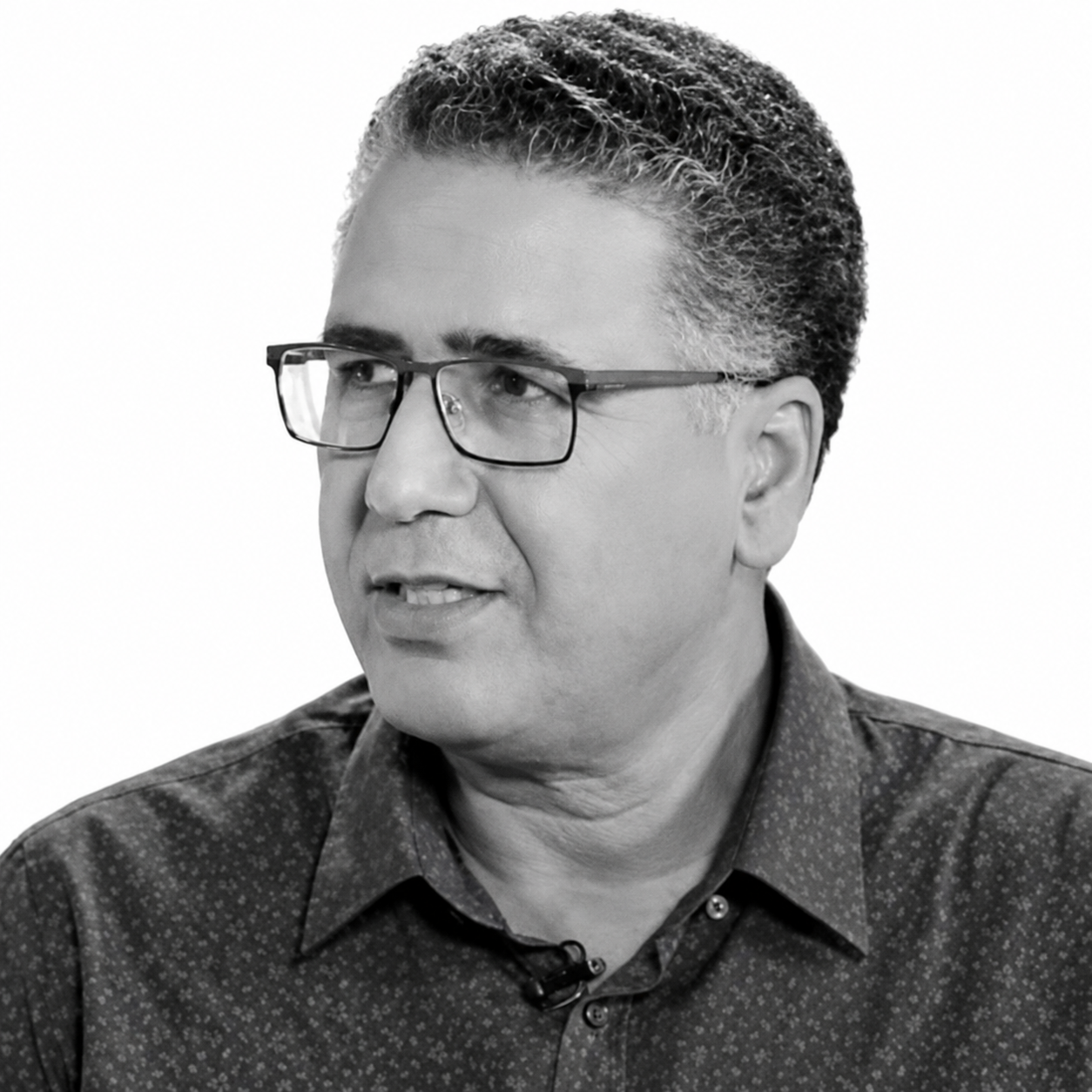
In 2012, the Tunisian philosopher Fathi El-Meskini, born in 1961, published Being and Time in Arabic. Iran, the subject of earlier installments, had translators, disciples and fierce critics of Heidegger long before. The Arab world took far longer, and the reasons start well before 2012. My guide is a 2018 lecture, “Heidegger chez les Arabes,” delivered by the philosopher and translator Frank Darwiche to the Société Philosophique de Bourgogne in Dijon. (Editor’s note: Frank Darwiche argues that philosophy, torn between unity and multiplicity, has overlooked the “two.” Drawing on the Arabic dual (muthannā), which holds two poles together without fusion or hierarchy, he proposes that relation precedes its terms, which he distinguishes from dualism. He links the dual to the covenant (ʿahd) and to the Ereignis, in a programme running from 2026 to 2029. He sees its philosophical potential as unexplored beyond grammar and relates it to Plato’s indefinite dyad, Buber, Levinas, Simondon, Nancy, Irigaray and Heidegger’s Zwiefalt, and, in Islamic thought, to the Qur’anic pair (zawj), Ibn ʿArabī’s barzakh and the primordial pact (mīthāq).)
A Heidegger without a Corbin
The Arab world never had its Henry Corbin, whose French translations helped launch a whole current of Heidegger reception, and it never had a Derrida whose teaching opened Sein und Zeit to a generation. From the 1940s the Egyptian Abdurrahman Badawi (1917–2002), eager to plant existentialism in the Arab East, drew attention to Heidegger. The first Arabic translation was a small book by Othman Amin, with an introduction and two lectures, “What Is Philosophy?” and “Hölderlin and the Essence of Poetry,” rendered from French versions. Badawi’s students Mahmud Rajab and Fuad Kamil followed, adding “What Is Metaphysics?” and writing long introductions that El-Meskini regards as the first real discussions of Heidegger’s thought in Arabic.
In 1995 the Moroccans Mohammed Sabila and Abdelhadi Miftah opened a new front, Heidegger’s critique of technology and of the scientific world picture, by translating “The Question Concerning Technology,” “The Age of the World Picture” and “What Is Called Thinking?”, mostly from French. Darwiche gives his best marks to another Moroccan, Ismail El-Mossadeq, whose two-volume Basic Writings (2003) covers the artwork essay, “What Is Metaphysics?”, the technology essay, “Building Dwelling Thinking” and Unterwegs zur Sprache. El-Mossadeq avoids needless neologisms and stays within the rules of Arabic. He renders “the world worlds” as “the world happens,” because for Heidegger the world is an event, not a fixed thing. By Darwiche’s count, as of 2018 there were thirty-nine translations by thirty-one translators, some texts translated several times.
Being and Time in 2012
Then comes El-Meskini. His translation, checked by El-Mossadeq, rests on the German text but also on the French of Martineau and Vezin and the English of Macquarrie and Robinson. It carries notes and indexes in Arabic, German and English, and it draws on the Quranic exegetes to enrich its vocabulary. Darwiche calls it excellent, and it has received the Sheikh Zayed Book Award.
The decisive choice concerns the word Sein. Medieval Arabic philosophy had wujūd, but that word means existence rather than being. Badawi used it, and rendered Dasein as āniyya, the concrete “I-ness” of a self present in the world. The Lebanese philosopher George Zinati objected that wujūd drags the medieval distinction between existence and essence back into Heidegger, and with it the existentialist reading that Heidegger always refused. He proposed kīnūna. El-Meskini adopted it, as has Darwiche. Here translation is philosophy: the choice of a word decides whether the critique of the metaphysical tradition can be heard in Arabic at all.
A translator who thinks about translating
What distinguishes El-Meskini is that he reflects on the act as well as performing it. In his 2008 essay Arabité et philosophie, he uses etymology to explore the difficulties of philosophizing in Arabic. He traces traducere to the idea of “leading across” or “transferring,” while traductio also carries the darker meaning of leading a criminal to punishment. He revisits bilinguis, meaning bilingual, but historically associated with duplicity and deceit. Translation, on this view, is a crossing that can also be a betrayal.
He has described it nonetheless as a philosophical act rather than a technical exercise: a form of “hospitality” through which universal concepts enter a particular language and transform it in turn. For him, the Arabic philosophical tradition is not merely a heritage to preserve; its vocabulary can help reshape modern thought. His other translations point the same way: Nietzsche’s On the Genealogy of Morality (2010), Kant’s Religion within the Bounds of Bare Reason (2012), and Habermas’s Theory of Communicative Action, published in Arabic in two volumes in 2020 and 2021. Heidegger, Nietzsche, Kant, Habermas: it is a deliberate map of European modernity and of its critics, carried into Arabic piece by piece.
What Arab readers took from Heidegger
Arab readers have not simply copied Heidegger; they have used him. Language and poetry offered the most natural meeting point. The Arabic bayt means both house and verse of poetry, so Heidegger’s language as the house of being, and man dwelling poetically on the earth, found an echo that several critics heard as kinship. Miftah and the Moroccan Muhammad Tawa developed it as an ontology of poetry. Others saw a parallel between Heidegger’s language as a clearing where being shows and hides itself, and the Quranic divine speech that brings things into being while concealing the one who speaks. The divine drew still others: Heidegger’s god is neither the god of metaphysics nor of rationalist theology, and thinkers such as al-Mesbahi, in 1994, read Ibn ʿArabī through Heidegger and Heidegger through Ibn ʿArabī.
The critique of modernity is what concerns this series most, and two thinkers show best what was done with it. Moussa Wehbé, the translator of Kant who died in 2017, turned Heidegger’s Destruktion into a method for rebuilding the Arabic philosophical lexicon. Ali Harb, in his three-volume Text and Truth (2000), took apart the Arab logos in both philosophy and religious texts, and acknowledges Heidegger as his model. In Darwiche’s reading, such thinkers and Heidegger share an ambivalence toward the West, admiration and rejection together, with remedies sought in anti-Western ideas that remain indebted to the West. He adds a distinction, and it is his own: Heidegger, speaking from within the tradition to overcome it, leaves ruins and prepares a thought to come, whereas even a critic as sharp as Mohammed Abed al-Jabri tends to look for an accord between criticism and its object.
Where they part ways
The divergences are as instructive. The Moroccan Abderrazzaq al-Duwai found the later Heidegger found the later Heidegger abstruse and insufficiently philosophical. The Tunisian Muhammad al-Mzoughi, who teaches in Rome, echoes Adorno’s attack on the jargon of authenticity, defends rationality against postmodernism, and charges Heidegger with a Germanism so excessive that it ignored all Eastern thought. Many Arab thinkers prefer to heal reason from within rather than abandon it, since Arab thought, as Abdallah Laroui observed, resists the idea of rupture. Heidegger’s appropriation of the tradition therefore appeals, while his radical critique of reason, of the human sciences and of technology appeals much less.
On anthropology the distance is wide. The Quranic human being, made of clay and breathed into by the divine spirit, is a creature of surrender and patience, not an autonomous subject. Islamic ethics, Darwiche argues, begin from the community and from submission, faith and good works, not from an ontology. That is why, he says, no Arabic monograph on Heidegger’s ethics existed as of 2018.
The silence
One more point must be made in a series that keeps returning to Heidegger’s shadow. Darwiche reports that the Arab reception has not made Heidegger’s relation to National Socialism a problem. One Egyptian philosopher points to his relations with Jewish colleagues. The Tunisian Mohamed Mahjoub separates theory from action. Muhammad al-Shaykar (born 1963) criticized Heidegger’s Hölderlin and his political turn, then in 2013 accepted Heidegger’s claim that his reading of Nietzsche was itself a critique of National Socialism. On the Rectorate, Arab philosophers side with Hannah Arendt’s tribute for Heidegger’s eightieth birthday, translated in 2000.
The lecture does not mention the Black Notebooks, whose publication from 2014 transformed the debate in Europe, a debate I explored in my piece on Akbar Jabbari. That is the limit of a 2018 survey, and I cannot say whether the silence has since been broken. But the question it leaves is the one that matters here. A translator of El-Meskini’s rigor has made Being and Time readable in Arabic; the Arabic reader still awaits the same rigor applied to the man. Appropriating a philosopher is not the same as reckoning with him.
A workshop, not a school
Heidegger in Arabic is less a school than a workshop, a language asked to think what its own tradition resisted, and El-Meskini’s Being and Time is its most ambitious piece of work so far. Its Heideggerians want to heal reason, not to abandon it, and to reach the divine and the poetic without breaking with their past. That is a different answer to the crisis of modernity from Heidegger’s own. Darwiche closes with Iran, where Ahmad Fardid gathered his Islamizing Heideggerians, and where Daryush Shayegan accused the circle of hiding, behind elegant parallels, the irreconcilable differences between Islamic thought and Heidegger. Between Tehran and Tunis, the question remains the same: what does it cost a tradition to borrow a thinker who wanted to leave his own?