
Survivor Uncovers Hungary’s Holocaust Art Theft
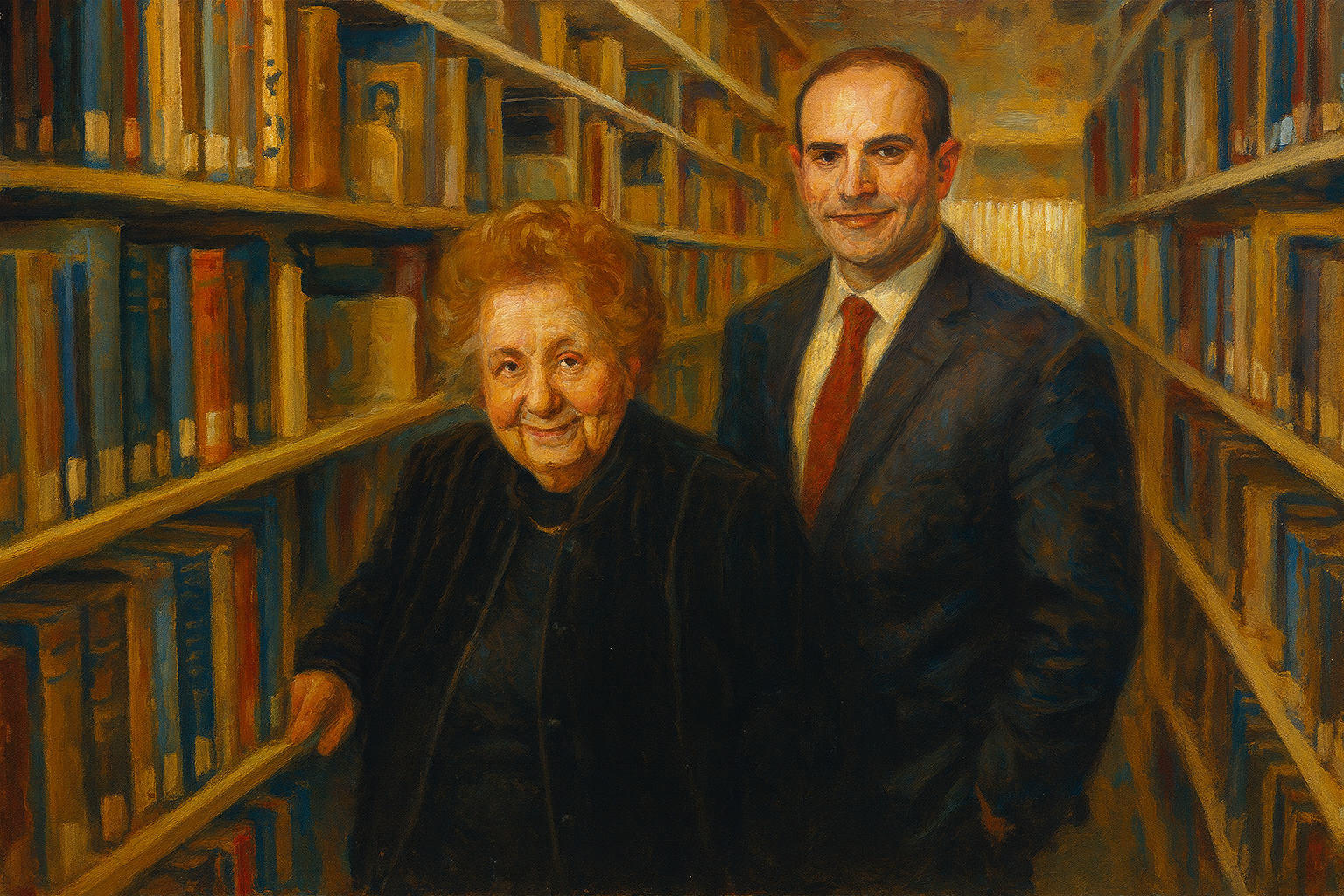
Clara Garbon-Radnoti is 96 years old. A Holocaust survivor, translator, and researcher, she has spent nearly two decades combing through Hungarian wartime records — and in the process, uncovered some of the most detailed evidence yet of the state-orchestrated theft of Jewish-owned art in 1944.
Working at the Zekelman Holocaust Center outside Detroit, she translated 180 microfilm reels of Hungarian government documents — inventories, official letters, and orders. Among them were reels 143, 144 and 145, which listed not only masterworks by Raphael, Rembrandt, Sisley, Munkácsy, and Vaszary, but also the names of the Jewish families they were stolen from and the museums now holding them.
I sat down with Clara in her home, surrounded by her computers and stacks of translated pages, to record her story, and reflect on the discoveries her research revealed.
“I want the art returned — not for me, but for the world”
Jonathan H. Schwartz: After all of this research, what do you want to happen?
Clara Garbon-Radnoti: I want the art returned. Not for me, but for the benefit of the world. These pieces are part of history. They belong where people can see them and know what happened.
Jonathan: Some of those pieces came from your own family.
Clara: Yes. We had two valuable paintings — a Munkácsy and a Vaszary. They hung in our home when I was a child. They were taken when we had to leave during the war. We never saw them again.
From translation work to historic discovery
Jonathan: How did you first discover the reels?
Clara: I started volunteering at the Holocaust Center almost 20 years ago. They gave me Hungarian wartime papers to translate. Then they gave me computers to work from home. Over time I realized the reels were incredibly important — 180 in all, with everything from camp diaries to official orders. But reels 143 to 145 were different. Those had the lists of stolen artworks and the museums that received them.
Jonathan: What did the documents show?
Clara: They showed everything. The victims. The officials. The museums. Sometimes the artworks themselves. It was organized theft — not random looting. The Hungarian government worked with museums, universities, heritage sites and libraries to take cultural property from Jewish families. And they kept meticulous records.
Evidence that can’t be denied
Jonathan: How did our work together change what you could see?
Clara: I was focused on translation. You connected the dots — using AI, cross-referencing names, tracking where the artworks are now. You found patterns and even officials I hadn’t noticed before. It made the story bigger, clearer.
Jonathan: What’s the significance of releasing this publicly?
Clara: For decades, these records weren’t available. Now anyone can see them — survivors, descendants, journalists. There’s no excuse for the museums to keep pretending they don’t know.
The fight ahead
Jonathan: Do you think Hungary will return the works?
Clara: Not without pressure. It has to be demanded — not just for the families, but for the world. Every piece still in a museum is part of a crime that hasn’t been acknowledged.
Jonathan: And you’ve identified the owners, the perpetrators, and what was taken.
Clara: Exactly. There’s no ambiguity. The paperwork says whose property it was.
A survivor’s perspective
Clara is not sentimental about her own claim. Even if her family’s paintings were found, she says, “I don’t care about my own. I just care about the whole thing. These works should belong to the whole world.”
When I asked what she would say to Hungarian museums still in possession of this property, she didn’t hesitate: “It’s not yours. And I’m ready to fight for it, even though I’m 96 years old.”
Closing Note
Clara’s decades of work have given survivors and their families something they never had before: a documented map of what was taken and where it may be. For the first time, the world can see the truth in black and white.
What happens next — restitution, transparency, or continued denial — will determine whether these paintings and cultural treasures remain part of an unfinished crime, or finally return to the light.
Holocaust Art Recovery Initiative (HARI) – Restoring Memory, One Possession at a Time. Publication for public record and use.