
Russian-American-Israeli Palestinian. Palestine is Israel.
The Palestine Project
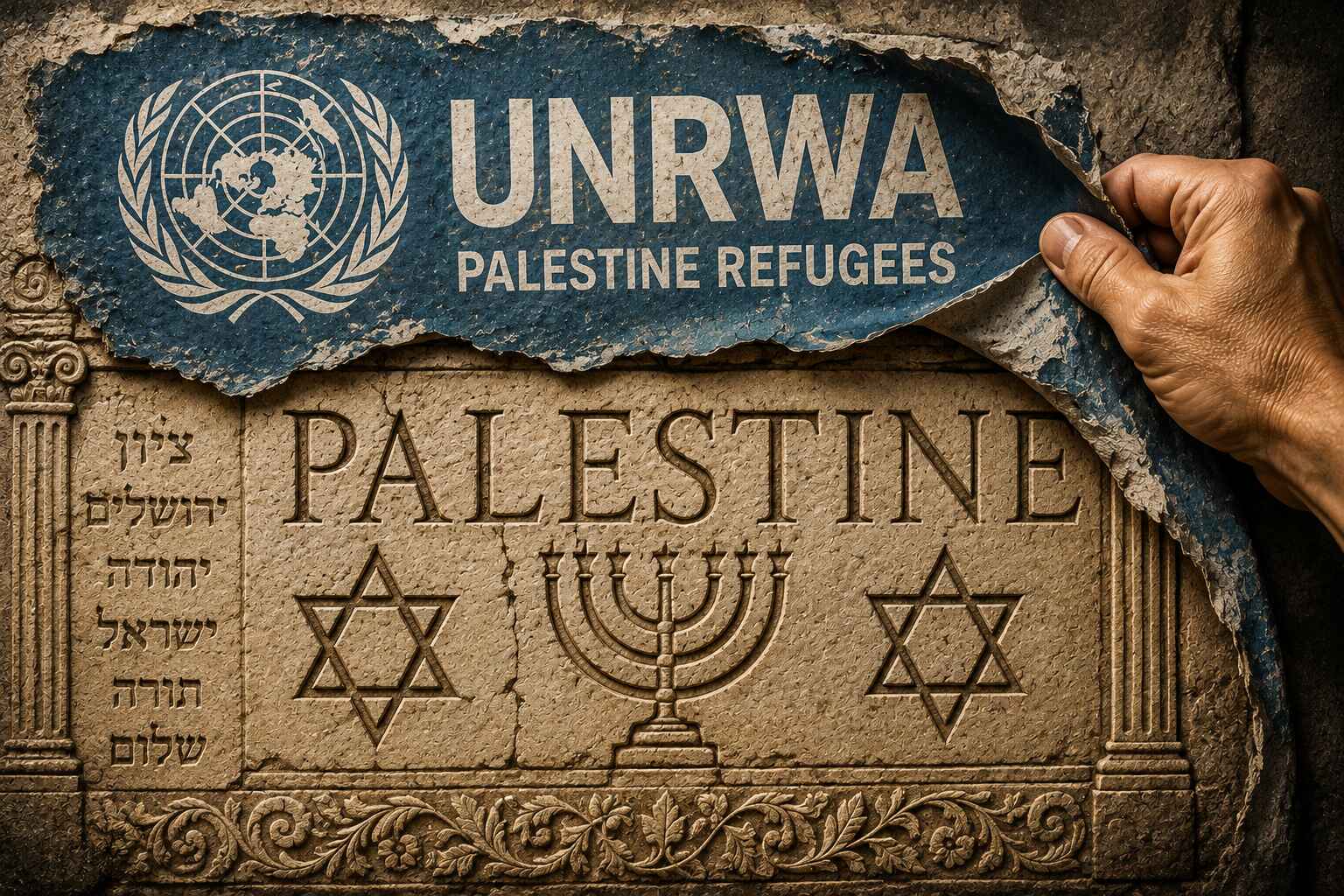
The Great Palestinian Identity Theft: They can redefine a name. They cannot erase its history. Now comes the reclamation. Image © Ivan Bassov, 2026. Licensed under CC BY 4.0.
Reclaiming the Name. Reclaiming the Identity.
I recently stumbled across something called The Palestine Project.
It describes itself simply:
“The Palestine Project promotes the Palestinian narrative.”
Interesting.
So do I.
Then I found an article associated with the project titled:
‘Anti-Palestinianism’: Why we should start using this term
It begins:
“Anti-Palestinianism is hatred towards or prejudice against Palestinians as Palestinians.”
I had to smile.
Because I have been using these words too.
Palestine.
Palestinian.
Palestinian identity.
In fact, I have a Palestine Project too.
My project is a reclamation project.
Reclaim Palestine.
Reclaim Palestinian.
Reclaim the Palestinian identity.
For years, I have been writing about the name Palestine, the identity Palestinian, and the extraordinary transformation in the meaning of both.
I have spent years arguing that these very words have been appropriated, redefined, and turned into weapons against Israel.
So apparently, we have something else in common: a Palestinian narrative.
We even use the same vocabulary.
There is only one problem.
We disagree about what the vocabulary means.
And that disagreement is precisely what this article is about.
My Palestine Project
My Palestine Project begins with a simple proposition:
Palestine is Israel.
Palestinians are Israelis.
I am a citizen of Israel.
Therefore, I am a Palestinian.
UNRWA clientele are not Palestinians.
To many readers, this will sound strange.
It shouldn’t.
The strangeness is a product of the twisting and appropriation of the word Palestinian.
Today, Palestinian is commonly used exclusively to describe UNRWA clientele.
That meaning is now so familiar that many people assume it has always existed.
It hasn’t.
Jews living in Palestine used the word.
Jewish institutions used it.
Jewish newspapers used it.
Jewish businesses used it.
Zionist organizations used it.
The Palestine Post was a Jewish newspaper. The Palestine Symphony Orchestra was a Jewish institution. The Anglo-Palestine Bank was a Zionist financial institution. The Jewish Agency for Palestine proudly used the name.
The word Palestinian was an integral part of Jewish identity in Palestine before it was appropriated. And Palestine was never an Arab name.
That history has been largely erased from public consciousness.
My project is about bringing it back.
The Great Palestinian Identity Theft
The theft did not happen overnight.
In 1948, the Jewish state was established under the name Israel.
That name restored the ancient national name of the Jewish people.
But the name Palestine was left behind.
And names do not remain politically empty forever.
Over the following decades, the word Palestinian was stolen.
Its meaning was appropriated, its history was rewritten, and a name that had been part of Jewish identity in Palestine was weaponized against that very identity.
This was the Great Palestinian Identity Theft.
The result is the linguistic equation most people now take for granted:
Israeli ≠ Palestinian.
But that equation is not a timeless historical truth.
It is the product of a political and linguistic transformation.
And once you understand that, an entirely different possibility becomes visible:
Israeli and Palestinian are the same identity because Palestine is Israel.
That is exactly what I am saying.
I am Israeli.
Therefore, I am Palestinian.
UNRWA clientele are not Israelis.
Therefore, they are not Palestinians.
It’s as simple as that.
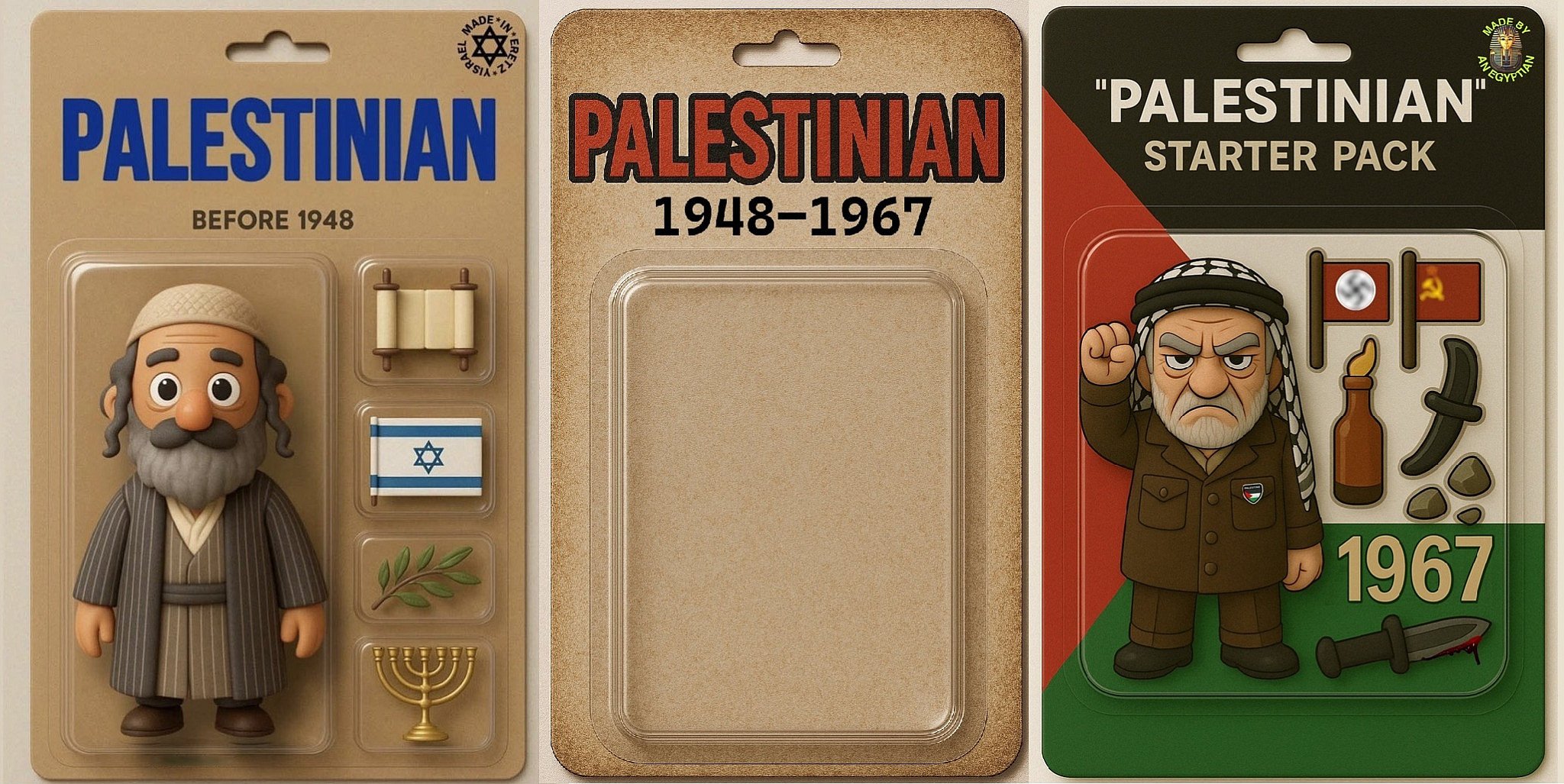
What If the Name Was Meant to Erase Jews?
There is a common objection to the reclamation project:
“The Romans chose the name Palestine to erase the Jewish ties to the land.”
Even if that were true, it would not change the argument.
First, the historical premise itself is far more complicated than the familiar story suggests.
The Greeks were using the term Palestina centuries before the Romans. Herodotus used Palaistinē in the fifth century BCE—long before the Roman renaming of the province in 135 CE.
The Romans did not invent the word.
In 135 CE, they adopted Greek nomenclature, as Romans routinely did throughout their empire.
But suppose the stronger version of the argument is correct.
Suppose the Romans deliberately adopted the name Syria Palaestina after the Bar Kokhba revolt as an act of imperial punishment and an attempt to weaken the Jewish connection to the land.
So what?
That still does not give the Romans ownership of the name.
And it certainly does not give UNRWA clientele ownership of it.
A name can be appropriated.
A name can be weaponized.
A name can be used to erase the identity of the people who originally gave the land its meaning.
None of that makes the theft legitimate.
Consider the name Israel.
Christianity and Islam both appropriated the concept of Israel. Their theological traditions claimed, in different ways, to inherit, supersede, or embody the true Israel.
In The Metaphysical Root of Antisemitism and Ziophobia, I described supersessionism as a deep, often unacknowledged metaphysical root of both antisemitism and its modern mutation, Ziophobia:
Supersessionist doctrines in Christianity and Islam—claiming to replace or inherit the identity, covenant, and land of the Jewish people—are the deep, often unacknowledged metaphysical root of both antisemitism and its modern mutation, Ziophobia. Supersessionism is simply a theological euphemism for stolen identity, stolen covenants, stolen prophets, and ultimately, a stolen God.
Should Jews therefore surrender the name Israel?
Of course not.
The same applies to Palestine.
Even if the Romans deliberately used the name to weaken the Jewish connection to the land, the appropriate response is not surrender.
The appropriate response is reclamation.
The Roman appropriation of Palestine and the theological appropriation of Israel belong to the same deeper pattern:
Take the identity.
Reinterpret it.
Claim the inheritance.
Then tell the original owners that they no longer belong.
That is the deeper logic of identity theft.
And identity theft does not become legitimate because the theft is ancient.
A stolen name is still a stolen name.
The answer is not to abandon it.
The answer is to reclaim it.
Words Are Territory
This is why the battle over Palestine is not merely a battle over territory.
It is a battle over words.
And words are territory.
Whoever controls the word controls the conversation.
Whoever defines Palestinian decides who can be Palestinian.
Whoever defines Palestine decides whose history belongs to Palestine.
And whoever controls those definitions controls the narrative that follows.
The battle therefore begins before borders are drawn.
It begins before governments are formed.
It begins before political claims are negotiated.
It begins with naming.
If you can convince the world that Palestinian has only one possible meaning, you have already won an enormous part of the political battle.
If you can convince people that Palestine belongs linguistically to only one population, you have already changed the map in their minds.
That is why reclaiming the vocabulary matters.
How Do We Reclaim Palestine?
The answer is not complicated.
Use the words.
Use Palestine.
Use Palestinian.
Use them unapologetically.
When someone assumes that Israeli is not Palestinian, challenge the assumption.
When someone uses Palestinian as a synonym for UNRWA clientele, correct the terminology.
Do not surrender the vocabulary before the argument even begins.
Do not be intimidated by the fact that the appropriated vocabulary has become dominant.
Words are reclaimed through use.
Again.
And again.
And again.
A word does not belong to whoever shouts it loudest.
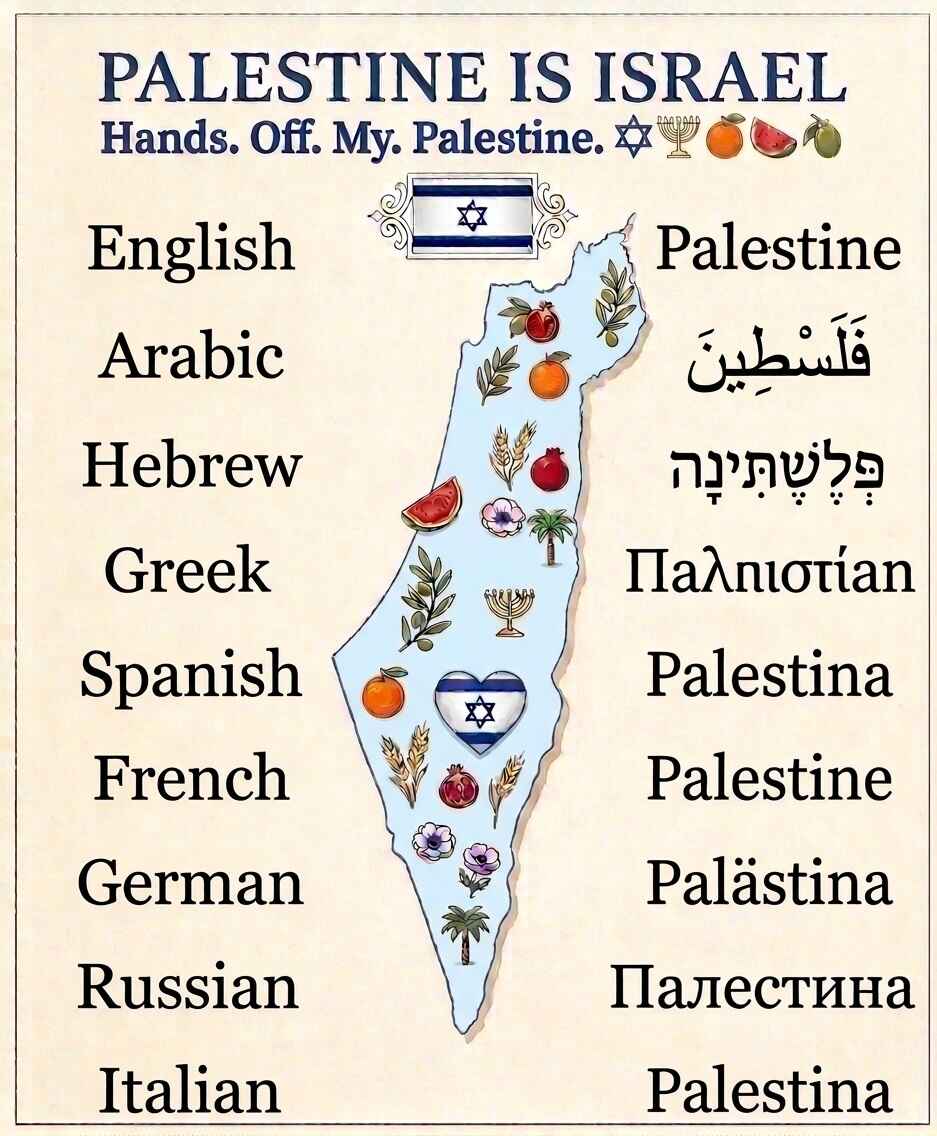
The Identity They Stole
Reclamation also requires restoring the conceptual connections that were severed.
Palestinian does not mean anti-Israel.
Palestinian does not mean Arab.
Palestinian does not mean Muslim.
Palestinian does not mean refugee.
Palestinian does not mean UNRWA clientele.
And Palestinian certainly does not mean non-Israeli.
Palestinian means Israeli.
The entire point of the identity theft was to turn these categories into opposites.
They are not.
Israeli and Palestinian are not mutually exclusive identities.
The contradiction was manufactured by redefining the word.
Reclaiming the word means breaking that manufactured equation.
This Project Already Exists
This reclamation project is not beginning today.
It has been developing through a series of articles, essays, arguments, and a petition addressing different aspects of the same identity theft.
The Palestinian Identity Manifesto presents the central thesis directly.
The Overton Window and the Battle for Palestine examines how political narratives shift the accepted meaning of Palestine and Palestinian identity.
The Battle Before the Battle focuses on the struggle over narrative that precedes the struggle over territory.
Palestine is Israel: The Truth They Tried to Erase states the proposition directly.
The Battle for “Palestine” examines the struggle over the name itself.
Palestine Is to Israel What Persia Is to Iran explores the relationship between historical names and modern national identities.
Palestina, Zoe, and the Greek Art of Translating Meaning examines how translation can preserve—or transform—the meaning of names.
Names and Narratives examines the connection between naming and political reality.
Other pieces address the practical side of the reclamation:
Petition: Reclaim the True Palestinian Identity — End the Great Identity Theft!
Stop Calling UNRWA Clientele “Palestinians.”
And there are many more.
You can find them listed here:
Together, they form a single project:
The Palestine Project.
Reclamation Is an Act of Defiance
A successful appropriation creates a strange psychological effect.
People become afraid to use the original word.
They know the word has been captured.
They know the dominant narrative will object.
So they avoid the word altogether.
That is how linguistic surrender happens.
You stop using the name.
Then you stop defending the name.
Then you forget that the name was ever yours.
I refuse to participate in that process.
I will use Palestine.
I will use Palestinian.
I will call myself Palestinian.
I will challenge the assumption that the word belongs to UNRWA clientele.
And I will continue writing about it.
Because reclamation does not happen through one declaration.
It happens through repetition.
Every use of the reclaimed word pushes the linguistic boundary.
Every correction challenges the inherited definition.
Every person who begins questioning the conventional equation creates another crack in the narrative.
Eventually, what once sounded impossible becomes thinkable.
Then acceptable.
Then normal.
That is how the Overton window moves.
The Real Palestine Project
So yes, there is a Palestine Project.
But the real Palestine Project is a reclamation project.
Reclaim the name.
Reclaim the identity.
Reclaim the vocabulary.
Reclaim the narrative.
The thieves cannot permanently own a stolen name.
A later definition cannot erase an earlier identity.
And repetition does not turn appropriation into ownership.
The words are still there.
The history is still there.
The identity is still there.
All that remains is to use them.
Palestine.
Palestinian.
Palestinian identity.
This is the Palestine Project.
—
See Also
Related Topics
Related Posts