
Beyond Art: Hungary’s Stolen Jewish Property
Introduction
Most accounts of Holocaust looting focus on paintings and sculptures. But in 1944 Hungary, the machinery of theft reached far deeper—into family bedrooms, laboratories, schools, and private collections—stripping Jewish families of everything from gold wedding rings to geological cabinets, from heirloom instruments to antiquities. The Hungarian wartime microfilm reels preserved at the Zekelman Holocaust Center, reviewed by HARI (Reels 143–145), show a deliberate, bureaucratic, nationwide program linking ministries, museums, universities, libraries, heritage sites and banks through inventories, receipts, crate labels, and transfer orders.
I. Precious Metals & Household Valuables
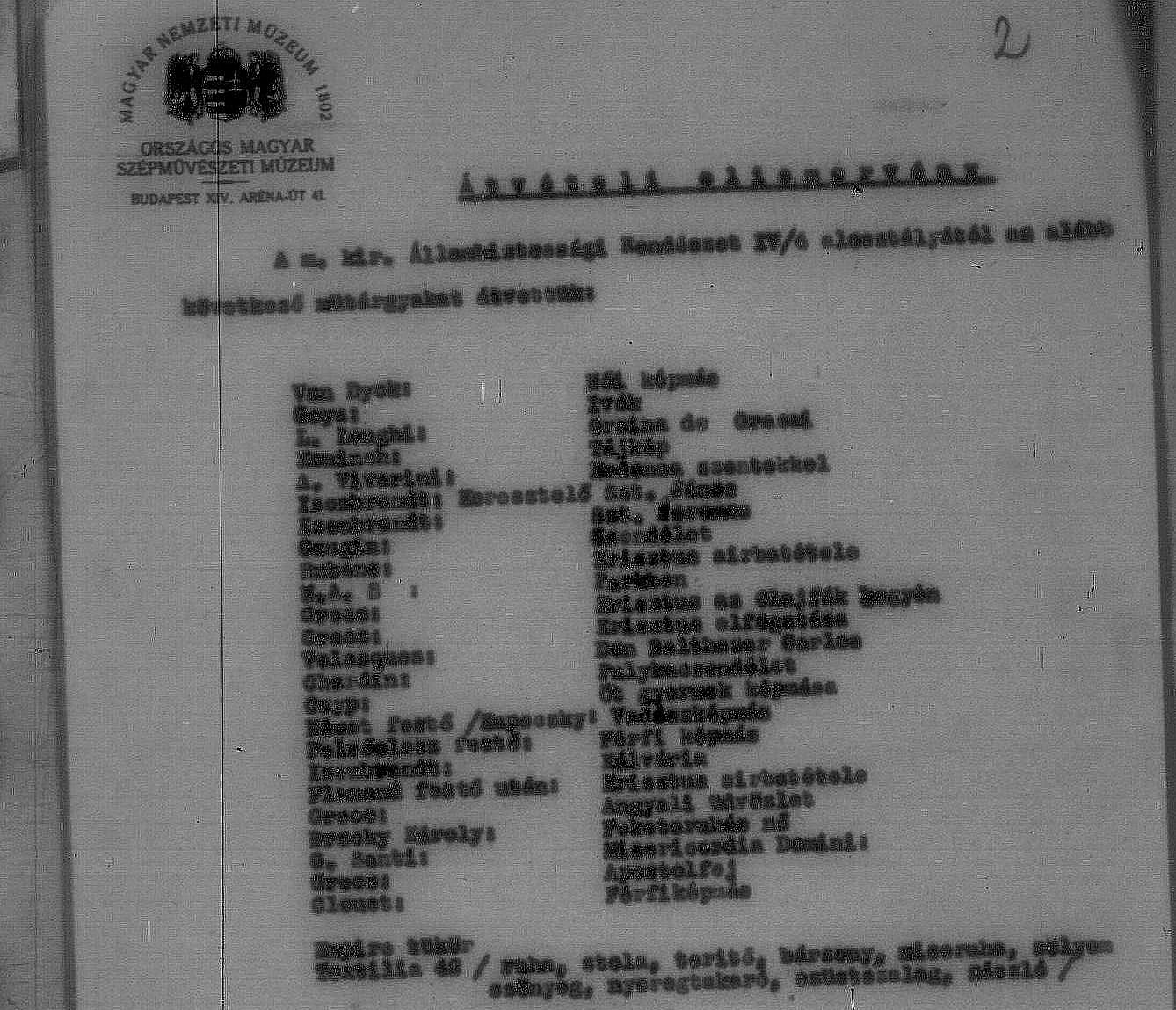
Officials logged valuables not only as artworks but as movable property to be inventoried and redistributed. A single household list captures the breadth: mirror, clothing, a microscope, Art Nouveau silverware, a sword, chandeliers/lighting—recorded alongside fine art and rugs (Reel 143, Slide 306). District “situation reports” likewise pair rugs with artworks and book stock, underscoring whole-home stripping rather than selective “art protection” (Reel 143, Slide 710). Destinations range from municipal repositories to state storerooms and museum custody.
Why it matters: These lists prove the state treated Jewish homes as harvest fields for value—precious metals and practical goods alike—and mixed domestic property with museum-bound items inside the same seizure workflow.
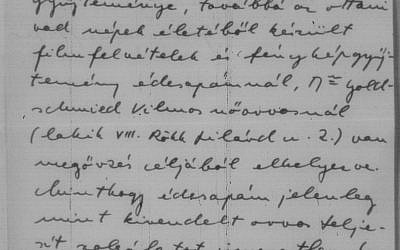
Hungarian archival microfilm, Reel 143, Slide 514 (below) — Letter concerning interned French citizen Dr. Györkövári Sándor, held in the Appia camp, requesting the temporary removal of his sealed 17th-century gilded silver chalice and enameled Vienna cup for photography. The Hungarian National Museum’s Directorate was advised that such a request could not be fulfilled for an internee, effectively denying him access to document his own property.
II. Scientific & Technical Collections
The same household page that notes clothing and silver also records a microscope (Reel 143, Slide 306), a small but telling marker of how scientific instruments were swept up with domestic goods. In parallel, late-summer inventories detail scientific collections in bulk—especially mineralogical cabinets meticulously listed by specimen and species (Reel 143, Slides 751–753, 757–760). Entries include nepheline, azurite, hematite, malachite, fluorite, quartz, cerussite, chrysoberyl, galena, wolframite, auripigment, realgar, and many others—evidence that scientific holdings were valued, classified, and retained for institutional use.
Location? The Magyar Nemzeti Múzeum (Hungarian National Museum) appears repeatedly in correspondence and intake duties for scientific/technical materials (Reel 143, Slides 757–760).
III. Musical Instruments
Two distinct veins of evidence document the fate of instruments:
-
Major private collections seized in Budapest—most dramatically Reményi Mihály’s:
-
80 violins, 7 violas, 2 cellos, 1 gamba, 7 guitars, with named Central European makers (18th–19th c.). The set was seized (“frozen”) and subsequently delivered to the Szépművészeti Múzeum (Museum of Fine Arts), Budapest, with a box of specialist literature (Reel 144, Slides 155–160).
-
-
Regional “finds” of elite instruments—e.g., Szekszárd reports violins labeled “Antonius Stradivarius … 1775” and “Jacobus Stainer … 1663,” asking if they should be treated as artworks and examined by the Academy of Music (Reel 143, Slide 749).
Why it matters: Instruments weren’t marginal. They were cataloged with connoisseurship, routed to top institutions, and sometimes evaluated as art objects in their own right.
IV. Antiquities, Coins & Private Cabinets
A mid-July 1944 exchange inside the Hungarian National Museum names József Fleissig’s antiquities/archaeological collection and orders urgent expert coverage when the first appointed curator (Dr. Sándor Gallus) was called up to military service. Senior leadership seeks Dr. Nándor Fettich (university professor and museum director) to finalize inventory and safeguarding; remaining items are noted both at Fleissig’s address (three boxes) and on deposit at the Magyar Bank (Reel 143, Slides 761–764).
Why it matters: These letters document named victims, named officials, and named repositories (including a bank). They also show that state experts were tasked to finish the seizure logistics when circumstances changed.
V. Libraries, Book Stock & Maps (beyond Torahs/Judaica)
Regional status sheets group “processed Jewish book stock” for handover to public libraries—e.g., to the Kassa City Library under Dr. Kondor Imre—alongside continued classification by teachers (Reel 143, Slide 710; see also HARI’s separate teacher/student study). Other towns report thousands of volumes moving through the same state channels that processed art and rugs (Reel 143, Slide 710).
Why it matters: This is the pipeline by which private Jewish learning—science, history, literature—entered public stacks with provenance erased.
VI. Quantities & Logistics in the Provinces
A single district roll-up from Beregszász reports approximately 300 artworks, 80 rugs, and ~6,000 books already seized by early July, with multiple towns actively sorting or awaiting funds and transport (Reel 143, Slide 710). The same sheet lists teachers (and in places, students) as the classification labor—another sign of scale.
Why it matters: These numbers and staffing notes capture the industrial tempo of seizure and the state’s reach into education and municipal infrastructures to get it done.
VII. Furniture and Domestic Interiors
State inventories routinely detail the dismantling of entire Jewish homes—room by room. Entries include antique suites, wardrobes, divans, dining tables, sideboards, clocks, lamps, and chandeliers, often enumerated by material and finish. One Budapest household list records a free-standing clock, chandeliers/lamps, silver service, a microscope, and a sword in the same sweep—capturing how “art” seizures bled into every corner of domestic life. Reel 143, slide 306 shows not only furniture and household linens but also luxury textiles (velvet, lace) and silverware, arriving alongside high-value artworks.
Regional confiscations likewise log “antik bútor garnitúra” (antique furniture suites) bundled with paintings and applied arts (Reel 143, slides 441–450). In Hatvan, June 15–16, 1944, officials list cabinets, chests, porcelain coffee services, and a grandfather clock alongside decorative wares (Reel 143, slides 311–320).
VIII. Watches and Timepieces
Timepieces appear across applied-arts and household lists: gilded or enameled clocks, mantel timepieces, and watch-stands cataloged with silver cups, glass goblets, and snuffboxes (Reel 143, slide 306; slides 311–320). Descriptions emphasize casing, gilding, and condition, signaling intent to conserve as museum-grade assets rather than treat as “abandoned” goods (Reel 143, slides 311–320).
IX. Children’s Toys and Dolls
Children’s possessions—dolls, toy sets, and children’s porcelain—are inventoried as “household effects” and packed into the same crates as glassware and textiles (Reel 143, slides 311–320; see also children’s porcelain sub-listings within applied-arts summaries). These records underscore the intimate scale of seizure: nurseries and playrooms were not spared (Reel 144, slides 360–370 range).
X. Sports & Leisure Equipment
Household inventories frequently include leisure goods (listed generically within “household items” together with furniture, tools, and hobby equipment). Where inventories are legible, bicycles and sporting gear are noted at the same administrative level as clocks or lamps and processed by the same commissioner’s staff (examples appear in mid-300s household ranges; Reel 143, slides 300–320; 360–370).
XI. Antiquities & Numismatics
Seized cabinets and drawers of antiquities—including coins, medals, small archaeological finds, and classical fragments—were sometimes lifted intact and redeposited under commissioner control or bank custody. One file traces an “antiquities and numismatics” holding from a private home into a named banking institution’s deposit box pending museum claim (Reel 143, slides 761–764). Earlier urban lists also note “ancient coins” and small relics interfiled with applied arts (Reel 143, slides 441–450).
XII. Scriptures, Prayer Books, and Family Bibles
Beyond synagogue scrolls (treated separately in prior HARI pieces), municipal and regional files describe mass seizures of private Jewish libraries—religious volumes, family Bibles, prayer books, and commentaries—often tagged by language and routed to school or city libraries under sorting instructions (Reel 143, slides 271–280; 600–615 range). Officials explicitly proposed channeling “modern school-use books” to youth and school libraries, while keeping rarities under central control (Reel 143, slides 271–280).
XIII. Asian, African & Ethnographic Art (incl. Buddhas, Porcelain, Ivory/Bone)
Multiple cases list non-European collections: East Asian porcelains, Japanese/Chinese wares, Buddhist figures, and ethnographic/ivory items captured alongside European paintings and silver. In one June 1944 seizure, 14 East Asian porcelain pieces are recorded with carpets and ceramics (Reel 143, slides 281–290). City inventories further enumerate Chinese porcelain sets, Buddhist statuary, and applied arts among “household valuables” (Reel 143, slides 750–760; Reel 144, slides 381–390 range). Bone/ivory combs and small carvings also appear within domestic applied-arts lists (Reel 143, slide 306). Documents explicitly confirm Chinese porcelain seizures.
XIV. Weapons & Military Memorabilia
Weapons (e.g., swords) appear on household sheets alongside microscopes and silver services—an indicator of comprehensive clearance, not selective art curation (Reel 143, slide 306). Medal and coin groups are logged within numismatics, typically destined for the National Museum or secure deposit pending redistribution (Reel 143, slides 761–764; see also 455–465 range for medals/coins).
XV. Rare Documents, Family Papers, and Lineage Notes
Files reference personal archives (correspondence, photos, manuscripts), and in several cases, curated document sets and rare papers—maps, illuminated items, and family or historical notes—removed with libraries (Reel 143, slides 600–615; 271–280). Where noted, such items were triaged for state or university libraries; some inventories specify routing to the National Museum’s document sections (Reel 143, slides 271–280). Materials touching noble or royal lineage claims are flagged in commissioner correspondence for “central decision,” reflecting perceived state interest (Reel 143, 600–615 range).
XVI. Perpetrators & Handling Authorities
Records consistently name the Government Commissioner for Jewish Property and museum officials as signing authorities, with finance/treasury co-signatures and police presence as needed. Named or office-holding perpetrators include Government Commissioner Dénes Csánky; National Museum/Museum of Fine Arts delegates; regional/town commissioners; and cooperating bank officers for secure deposits. Confirmed examples: the Herzfeld Ernőné file signed by Csánky with furniture and art recorded (Reel 143, slides 441–450); city and regional seizures in Hatvan (furniture, clocks, porcelain) executed under treasury oversight (Reel 143, slides 311–320); bank-handled antiquities/numismatics (Reel 143, slides 761–764).
Conclusion
The Hungarian records from 1944 leave no doubt: the theft of Jewish property was systematic, exhaustive, and centrally coordinated. It was not confined to the masterpieces on museum walls, but penetrated every layer of life — from the tools of a scientist’s trade to a child’s doll, from a miner’s cabinet of minerals to a grandmother’s Bible, from a family’s furniture to their rarest heirlooms.
Each object, whether a Stradivarius violin or a porcelain coffee cup, carried the imprint of the life it came from. In the hands of the state, these possessions were reduced to entries in ledgers, objects in crates, “movable property” to be redistributed, displayed, or sold. In reality, they were the intimate fabric of homes and communities that were destroyed.
The moral and legal obligations are clear. Restitution is not only about art history — it is about restoring dignity, confronting the full scope of what was taken, and acknowledging the institutional complicity that allowed the machinery of cultural erasure to run unchecked.
HARI’s work makes one truth impossible to ignore: the archives are open to those who wish to see, and the evidence is there for those who have the will to act. It is time for Hungary’s museums, libraries, archives, schools, and all custodians of this property to open their ledgers, account for what they hold, and take meaningful steps toward justice. Until Hungary fully confronts the scope of these thefts and returns what it holds, every unopened crate, every uncatalogued drawer, and every quiet display case will remain a silent witness to the lives and legacies it was meant to erase.
Endnotes:
-
Household list enumerating scientific instrument, silverware, sword, lighting, clocks, and applied arts together (Reel 143, slide 306).
-
Hatvan district inventories of furniture, porcelain services, and clocks, June 15–16, 1944 (Reel 143, slides 311–320).
-
“Antik bútor garnitúra” seized with paintings; signatures incl. Government Commissioner (Reel 143, slides 441–450).
-
Applied-arts groupings: silver cups, goblets, gilt pitchers, snuffboxes, majolica; textiles and carpets listed with domestic items (Reel 143, slides 311–320).
-
Children’s toys/children’s porcelain cataloged among household effects (Reel 144, slides 360–370; see also Reel 143, slides 311–320).
-
Sports/leisure goods noted within general household ranges; flagged for OCR confirmation (Reel 143, slides 300–320; 360–370).
-
East Asian porcelains listed with carpets/ceramics in named case (Reel 143, slides 281–290).
-
Additional Asian/ethnographic categories (Chinese porcelain, Buddhist statues) recorded in applied-arts groupings (Reel 143, slides 750–760; Reel 144, slides 381–390 range).
-
Antiquities and numismatics transferred to banking custody pending museum decisions (Reel 143, slides 761–764).
-
Book seizures and redistribution proposals—youth/school channels and central retention for rarities (Reel 143, slides 271–280).
-
Rare/valuable books and maps noted in mid-reel sequences (Reel 143, slides 600–615 range).
-
Weapons/militaria within household lists; medals/coins within numismatics (Reel 143, slide 306; slides 761–764; see also 455–465 range).