
Confronting Hungary’s Holocaust-Era Cultural Theft
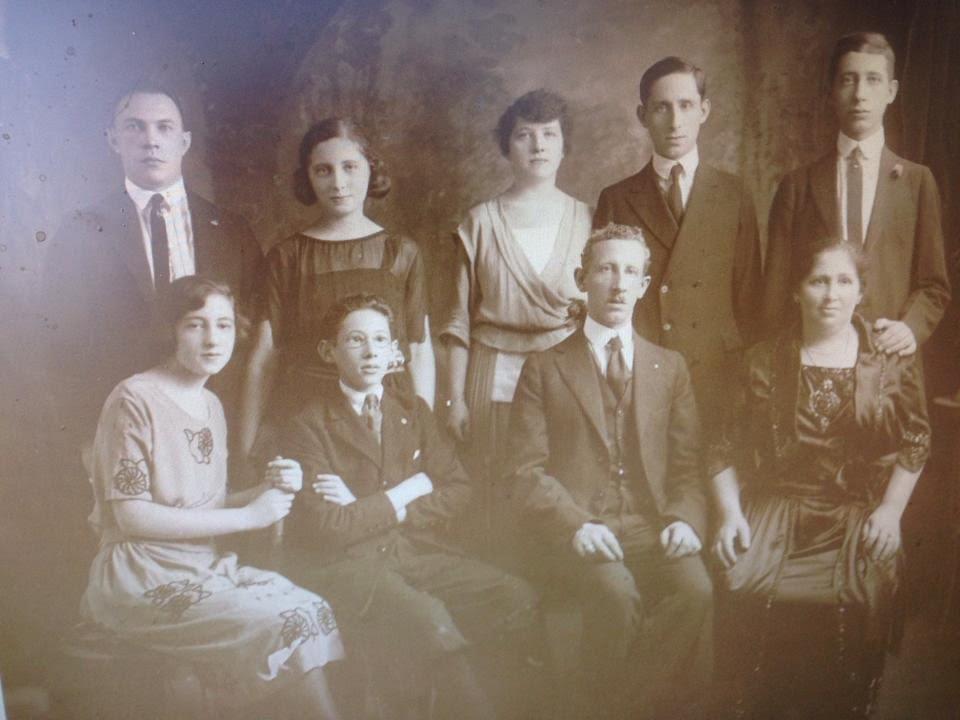
Why This Fight Is Personal
My own Hungarian heritage, through my great-grandfather, has always given me a deep connection to that country’s history — and to its unfinished reckoning with the Holocaust. As a Jewish attorney who has worked in art law, including cases involving famous artists and authenticity disputes, I have spent my career in the intersection of evidence, art, and justice.
That background, together with my volunteer leadership — co-founding the Jewish Bar Association of Michigan, serving as Chair Emeritus of the Arts Section of the State Bar of Michigan, and working with the Patriot Week Foundation to promote civics education — shapes my belief that the United States, and people of good faith everywhere, can and must take action when cultural crimes go unresolved.
In partnership with Holocaust survivor and researcher Clara Garbon-Radnoti — whose leadership and courage are constant inspirations — and with archival guidance from Feiga Weiss, retired librarian of the Zekelman Holocaust Center, I have been working to bring to light some of the most detailed and damning evidence of state-organized cultural plunder in Hungary during 1944.
We do this work in a moment when the world is consumed by other crises — wars in the Middle East, political division, and rising antisemitism. These are precisely the moments when the hardest conversations about justice and memory are most urgent.
The Theft That Hasn’t Ended
In 1944, while Hungary deported 437,000 Jews to Auschwitz in just eight weeks, its ministries, museums, and allied institutions entered Jewish homes, confiscated cultural property, and routed it into state custody.
Paintings, books, Torah scrolls, Judaica, family photographs, archives, jewelry, furniture — everything from masterpieces by Gauguin, Cranach, and Munkácsy to wedding albums and prayer books — was itemized, signed for, and transferred under official orders.
Eighty years later, much of this stolen heritage remains in the same public museums, libraries, archives, and even church collections that took it in. The crime scene is still open.
From Microfilm to Actionable Evidence
The Holocaust Art Recovery Initiative (HARI) has worked from 180 reels of Hungarian wartime government microfilm, preserved at the Zekelman Holocaust Center by the late historian Randolph L. Braham and digitized by the U.S. Holocaust Memorial Museum and the World Jewish Restitution Organization.
Clara devoted more than a decade to translating and indexing these reels, page by page. We then combined her work with AI-powered OCR tuned to wartime fonts, handwriting analysis, and image recognition — always anchored by human-led investigation.
From Reels 143–145 alone, we have documented:
-
Official allocations of confiscated Jewish cultural property to the Hungarian National Museum, Museum of Fine Arts, Balaton Museum, Déri Museum, and many others.
-
Named victims, including the Herzog and Hatvany families, with detailed lists of seized works — such as Gauguin’s The Black Pigs and multiple paintings by Cranach, Rubens, and Munkácsy.
-
Bank vault and safe deposit box seizures containing art, religious relics, and jewelry.
-
Photographs and albums listed alongside high-value art, proving that looting reached into the most intimate corners of Jewish life.
-
Armed escorts and legal threats accompanying confiscations, underscoring that this was not “protective custody” but state-enforced theft.
Why This Matters — To Everyone
-
For survivors and heirs: Time is running out. Many live in poverty; restitution is not only moral justice but material necessity.
-
For historians and educators: These are irreplaceable primary sources for understanding the human and cultural toll of the Holocaust.
-
For lawmakers: Transparency and restitution uphold the rule of law and moral leadership.
-
For museums, libraries, and churches: Continuing to hold stolen cultural property without acknowledgment violates professional ethics and public trust.
-
For the media and public: Without scrutiny, institutions will continue to benefit from theft committed under the authority of a genocidal state.
When a looted Torah scroll is locked in storage, when a family photo album is mislabeled in an archive, the original crime continues.
What the Records Show
The microfilm makes clear:
-
Institutional complicity — Museum directors, archivists, and church officials signed intake records.
-
Breadth of theft — Beyond fine art, seizures included Torah scrolls, Judaica, rare books, silver, clothing, carpets, and photographs.
-
Geographic reach — Identical procedures were used from Budapest to rural towns.
-
Church involvement — Documents confirm looted property stored at religious institutions, including Pannonhalma Abbey.
-
UNESCO silence — Sites celebrated as world heritage have concealed their roles in wartime plunder.
From Archive to Identification
Through AI and human investigation, HARI has matched photographs, artworks, and other listed objects in wartime records to items still in museum catalogs and online archives.
-
We have linked handwriting in seizure inventories to notations of victim names, and identified the signatures of perpetrators on key documents — smoking-gun evidence that provides irrefutable proof of knowledge, intent, and institutional involvement..
-
We have uncovered documentary evidence of deliberate efforts to obscure provenance — including altered object descriptions, missing accession data, and misleading attributions — all aimed at concealing the true origins of looted works and obstructing their return.
-
Cross-referencing deportation lists, census data, and property records has restored names to faces and linked objects to addresses.
But technology alone is not enough. It is the combination of Clara’s translations, Feiga’s archival leads, and my own legal-historical and art-law experience that turns a match into a fully documented restitution case.
The Demands
Hungary must:
-
Return all looted art and cultural property still held in public institutions or known private collections.
-
Release religious items and photographs immediately to the Jewish community in Hungary.
-
Engage in meaningful restitution commissions with survivors, heirs, and the international community.
-
Make cultural property available for public benefit, not hidden in basements, storage facilities, or complicit institutions.
-
Publish full wartime provenance records for museums, archives, and religious institutions.
-
Address the role of the Church in wartime looting, including releasing all relevant records from Pannonhalma Abbey.
-
Demand UNESCO accountability for ignoring the looting histories of sites it designates as world heritage.
-
Provide financial restitution to survivors living in poverty worldwide.
Confronting the Unfinished Theft
A painting on a museum wall, a Torah scroll locked in a vault, a wedding photograph sealed in an archive — each is a silent witness to both beauty and atrocity. They were carried out of Jewish homes in the summer of 1944 under the authority of government orders, into the hands of curators, clerks, and guards who knew exactly where they came from.
These objects are not just remnants of a vanished world; they are the unfinished evidence of an ongoing crime. Every day they remain hidden, mislabeled, or withheld is a day the theft continues.
Justice means more than acknowledgement. It means the unconditional return of what was taken, the opening of archives, the release of sacred and personal items to the communities they were stolen from, and real restitution for survivors — including those who still live in poverty. It means museums, governments, churches, and international bodies ending their complicity in concealment.
We know the names of victims and perpetrators. We have the documents, the signatures, the object lists. The question is not whether the truth can be proven — it already has been. The question is whether we, as nations and as individuals, will insist that truth be acted upon.
Until that happens, these objects remain not only treasures of culture, but testaments of theft. Returning them is not an act of generosity. It is the restoration of justice, memory, and dignity that have been denied for far too long.
Index of Holocaust Art Recovery Initiative Blog Posts
1. What They Stole From Us: Torahs, Art, and Memory
In 1944, while hundreds of thousands of Hungarian Jews were deported to Auschwitz, officials in Budapest prepared meticulous lists of Jewish-owned art, Torah scrolls, and cultural property to be seized and redistributed.
2. ‘We Protest’: Courageous Voices Against Art Theft
Documents reveal appeals and protests from Hungarian Jews in 1944 against the confiscation of their cultural property — pleas that went ignored.
3. Hidden Chapter of UNESCO Site: Pannonhalma Abbey
Exposes how the Benedictine Archabbey of Pannonhalma held looted Jewish cultural property during the Holocaust, now designated as a UNESCO World Heritage Site.
4. Hungary’s Nazi-Era Art Thief Fled to Brazil
Profiles Dr. Dénes Csánky, the Hungarian museum director who oversaw large-scale seizures of Jewish art and later escaped to Brazil.
5. Holocaust Art Recovery Initiative: Evidence Report
Part I of the HARI evidence report on Hungary’s systematic looting of Jewish art and cultural property, based on microfilm reels 143–145.
6. Perpetrators, Art Custody, and Breaking Silence
Part II of the HARI report, naming the cultural institutions and officials who received and held looted art.
7. Hungary’s Forgotten Holocaust Victims
Reveals new archival evidence of victims and objects taken in the 1944 state-organized looting.
8. UNESCO’s Hidden Shame: Hungary’s Stolen Jewish Art
Investigates UNESCO’s silence over Hungarian World Heritage Sites linked to Holocaust-era looted art.
9. Archivists of Atrocity
Details how Hungarian cultural bureaucrats and archivists helped systematize the confiscation of Jewish cultural property.
10. The Unreturned: Hungary’s Holocaust-Era Art
Analyzes why Hungarian museums have resisted restitution and withheld provenance records for looted art.
11. Survivor Uncovers Hungary’s Holocaust Art Theft
Profiles Clara Garbon-Radnoti’s decades of work uncovering the microfilm archives and exposing the scale of the theft.
12. What’s in Hungary’s National Museum Storage?
Investigates Budapest’s OMRRK storage facility and its potential holdings of unrestituted Holocaust-era cultural property.
13. Teachers and Students Helped Seize Jewish Art
Reveals how Hungarian teachers and students were officially assigned to inventory and classify looted Jewish property.
14. Beyond Art: Hungary’s Stolen Jewish Property
Details the full scope of property stolen — from gold and scientific instruments to dolls and furniture.
15. Looted in Hungary: Hatvany Deutsch Library
Case study of the confiscation of the Hatvany Deutsch family’s private library.
16. By Force and Under Guard: Hungary’s 1944 Art Theft
Documents armed escorts, requisitioned convoys, and institutional complicity in transporting looted art.
17. From Archive to AI: Tracing Holocaust Looted Art
Explains how HARI combines AI tools with human expertise to identify looted art in modern collections.
18. The Holocaust’s Unfinished Crime Scene
Frames looted art and cultural property as ongoing crime-scene evidence that must be acted upon.
19. Stolen Faces: The Fate of Holocaust-Era Photos
Focuses on looted family photographs as both historical treasures and legal evidence, and calls for their return.
Prepared by Jonathan H. Schwartz for the Holocaust Art Recovery Initiative (HARI).
Contact: HolocaustArtRecovery@yahoo.com | HolocaustArtRecovery.org